


























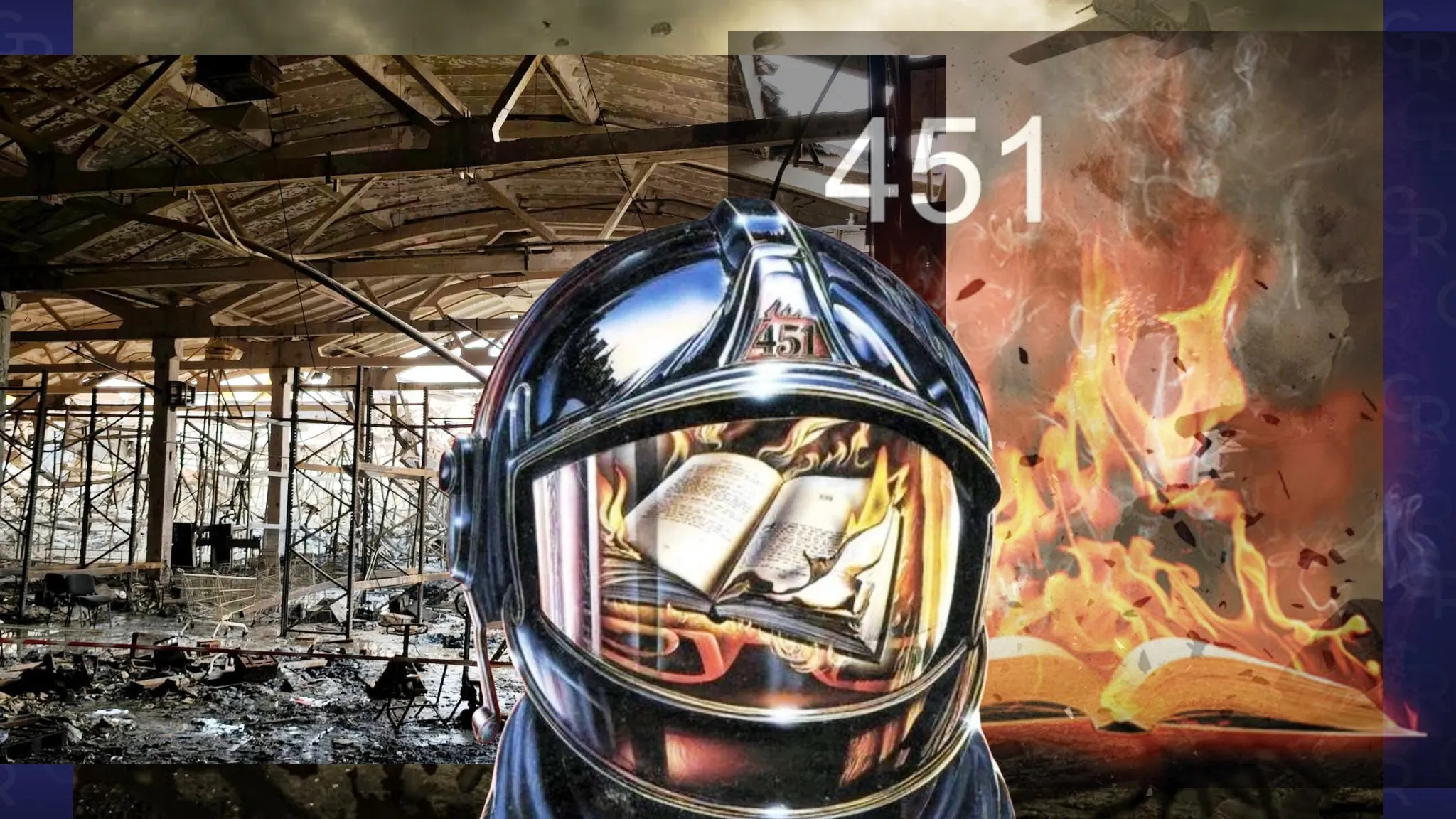
"Fahrenheit 451" in Kharkiv: What Happened at the Offsite Verkhovna Rada Committee Meeting on the Ruins of the "Ranok" Logistics Center
All news | | 215 | Author: Olena Zelenina
Collage by Olena Zelenina.
In Kharkiv, where most of the country’s publishing capacity in the book publishing industry is concentrated, an offsite meeting of the Verkhovna Rada Committee on Humanitarian and Information Policy took place, dedicated to the critical situation in Ukrainian book publishing and Western mechanisms for supporting the industry.
Ukrainian publisher, co-founder, and CEO of the Kharkiv publishing house "Ranok" Viktor Kruglov spoke about the current scale of losses and the main challenges for the industry. According to him, to date, the enemy has destroyed, according to various estimates, from 13 to 15 million books — about half of what is printed in Ukraine annually.
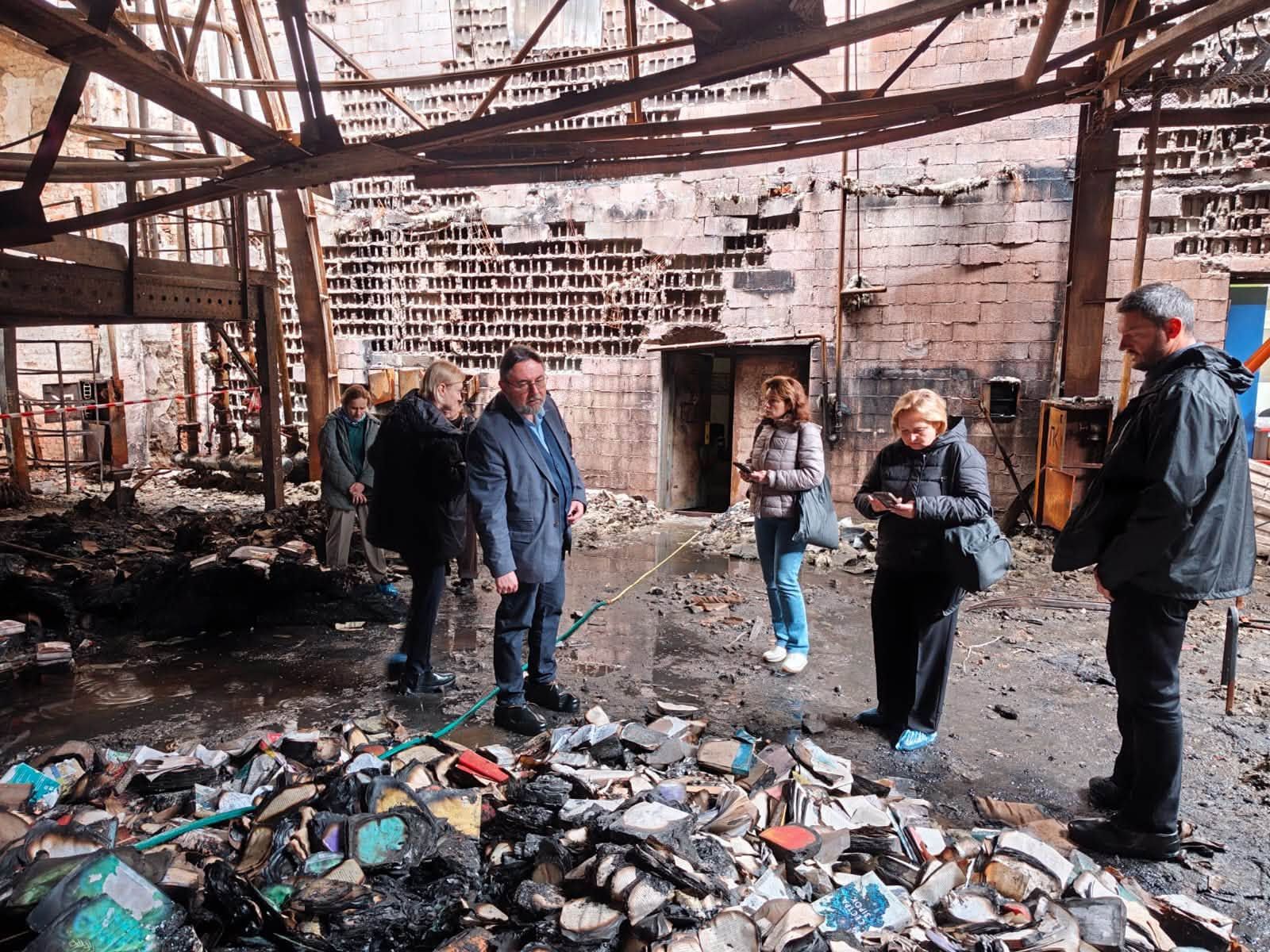
"Imagine the mood in which publishers are making decisions about restoring and printing books. If action is not taken urgently, publishers may not survive. Programs for preferential insurance and lending are necessary," Viktor Kruglov emphasized.
People's deputies and representatives of the publishing community outlined key directions for saving and developing the industry:
Cognitive warfare and national security: Chairman of the Verkhovna Rada Committee on Humanitarian and Information Policy Mykyta Poturaiev accurately emphasized that Russia is waging a "cognitive war" against Ukraine, fully understanding the critical importance of the Ukrainian book for Ukraine's national security.
Criticism of restrictions and subsidies: Committee member, People's Deputy Volodymyr Viatrovych harshly criticized the Ministry of Culture's proposal to partially support bookstores only in small communities. He compared this to promising to pay Ministry of Culture officials only 10% of their salaries, and only to those living in Troieshchyna, with the rest paid after the end of martial law. The deputy warned that annual turnover limits for recipient bookstores would only encourage businesses to go into the "shadow economy."
He also touchingly wrote on his Facebook page:
"March 30, 2023, I was signing my new book 'Our Center-Long' [Nasha Stolitnia] here, which we made together with the 'Ranok' Publishing House. Today, this once wonderful place is like an illustration of Bradbury's 'Fahrenheit 451'."
Budget prospects: Deputy Minister of Culture Bohdana Laiuk reported that funds are already planned in the 2027 budget for the full implementation of the law on state support for bookstores.
International support and lending: The European Bank for Reconstruction and Development (EBRD) is ready to join a special lending program for publishers. The main condition for this is conducting a verified study of the state of the publishing industry.
Depalinizatsiya (De-Russification) of libraries: Founder and President of the Factor Group of Companies Sergey Polituchiy reminded that during the occupation, the enemy primarily brought Russian-language literature into local libraries. Even according to official statistics, at least half of the holdings of Ukrainian libraries remain in Russian, so their urgent replenishment with modern Ukrainian books is a matter of cultural survival.
Logistical security: Writer and coordinator of the Kharkiv cultural club Igor Zarudko noted that the bookstore network should also serve as a place for dispersing book stocks, as striking one large warehouse is much easier than destroying a hundred separate bookstores.
Systemic cooperation: General Director of the "Vivat" publishing house Yuliya Orlova proposed transferring the work of industry experts and parliamentarians into a permanent working group format.
Following the meeting, participants tentatively agreed to hold an offline meeting in the near future to draft concrete regulatory acts and bills.
The "Gromada Group" local media network works thanks to your trust.
Support independent regional journalism with a donation.

I

Comments
Some more relevant news for now