















Mayor of Horodnia: First in Kharkiv to Utter the Word "Prefect," Predicted Decentralization 20 Years Ago, and What He Thinks Now
All news | | 1,408 | Author: Olena Zelenina
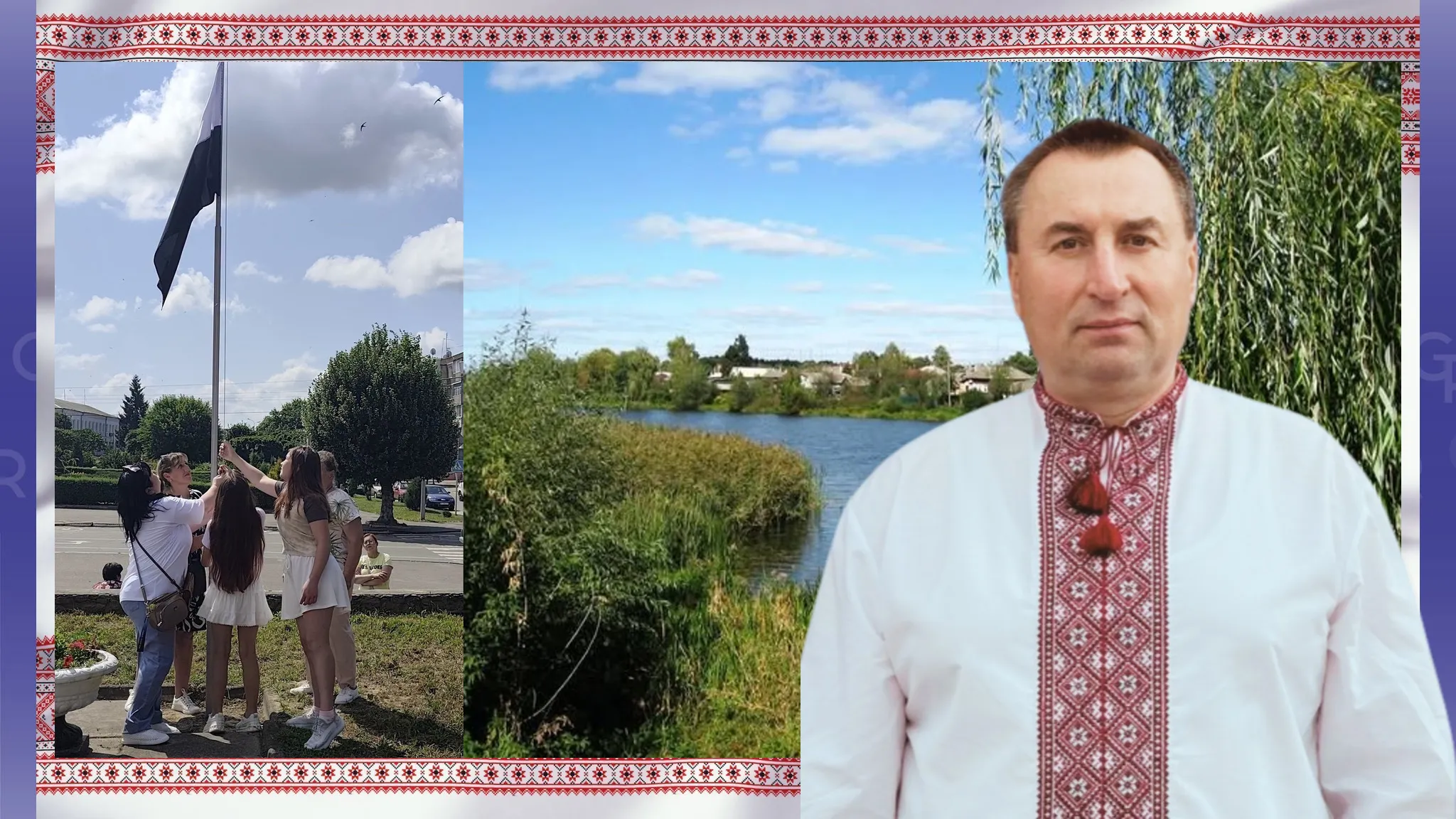
Collage by Olena Zelenina.
Decentralization has proven itself 100%, becoming a civilized practice upon which strong European states were built. In critical moments, mutual assistance between Ukrainian hromadas and the ability to make decisions locally without looking up to "those at the top" worked most effectively.
This was stated by the head of the Horodnia urban hromada, Andriy Bohdan, to the host, Oleksandr Shvets, on the program "Voice of the Community" (a joint project of the Kharkiv Press Club and the network of local media "Gromada Group").
It is difficult to call the decentralization reform a trendy novelty when you have been working on its academic and practical foundation for nearly two decades.
For Andriy Bohdan, this journey began long before the first official legislative initiatives. Back in 2006, while studying at the National Academy for Public Administration under the President of Ukraine in Kharkiv, he chose decentralization as the key topic for his master's thesis.
Back then, in the mid-2000s, the idea of a radical redistribution of powers and finances from the center to local hromadas seemed utopian to many officials. The speaker recalls with a smile how, during the defense of his diploma paper at the state exam, he uttered the word "prefect"—a term then alien to Ukrainian administration.
The professors and committee members were genuinely surprised by such terminology. In 2012, his conceptual article was published in the Holos Ukrayiny newspaper—several years before decentralization became a key national trend.
Almost everything written back then in theory eventually became practice, although the reform itself remains an unfinished project to this day.
Assessing the path traveled over the past nine years, Andriy Bohdan sees the reform as both a huge strategic breakthrough and a source of painful oversights revealed under the impact of the pandemic and the full-scale war.
Key Pros and Philosophy of the Reform:
European development model: Decentralization has proven itself 100%, becoming a civilized practice upon which strong states were built.
Tested by crisis: The formed structure of hromadas endured extreme conditions—during COVID, and later during the days of Russian occupation and border shelling.
Horizontal ties: In critical moments, mutual support among the hromadas themselves and the ability to make decisions locally without looking up to "those at the top" worked most effectively.
What Needs to Be Changed and Improved:
Unified basic standards: The state must fully and equally fund delegated powers (healthcare, education, security) across the entire country, rather than shifting their provision onto financially weakened local budgets.
Elimination of redundant links: A three-tier management system must operate clearly in the country: Cabinet of Ministers — region (oblast) — hromada. District (raion) administrations and district councils in their current form have turned into intermediate middlemen that duplicate functions and consume time.
Preserving the state's presence locally: The closure of tax offices, social protection services, and pension department branches in small centers must not be permitted. Phasing out these structures in favor of regional centers causes logical outrage among residents.
Reducing bureaucratic burdens: A revision of the rigid thresholds for tender procurement is necessary. Constant minor procedures require an inflated staff of specialists and enormous time expenditures, which critically slows down work under wartime conditions.

Comments
Some more relevant news for now