
























Mandatory Evacuation, Fight for Survival: How the Derhachi Community Lives Today
All news | | 997 | Author: Olena Zelenina
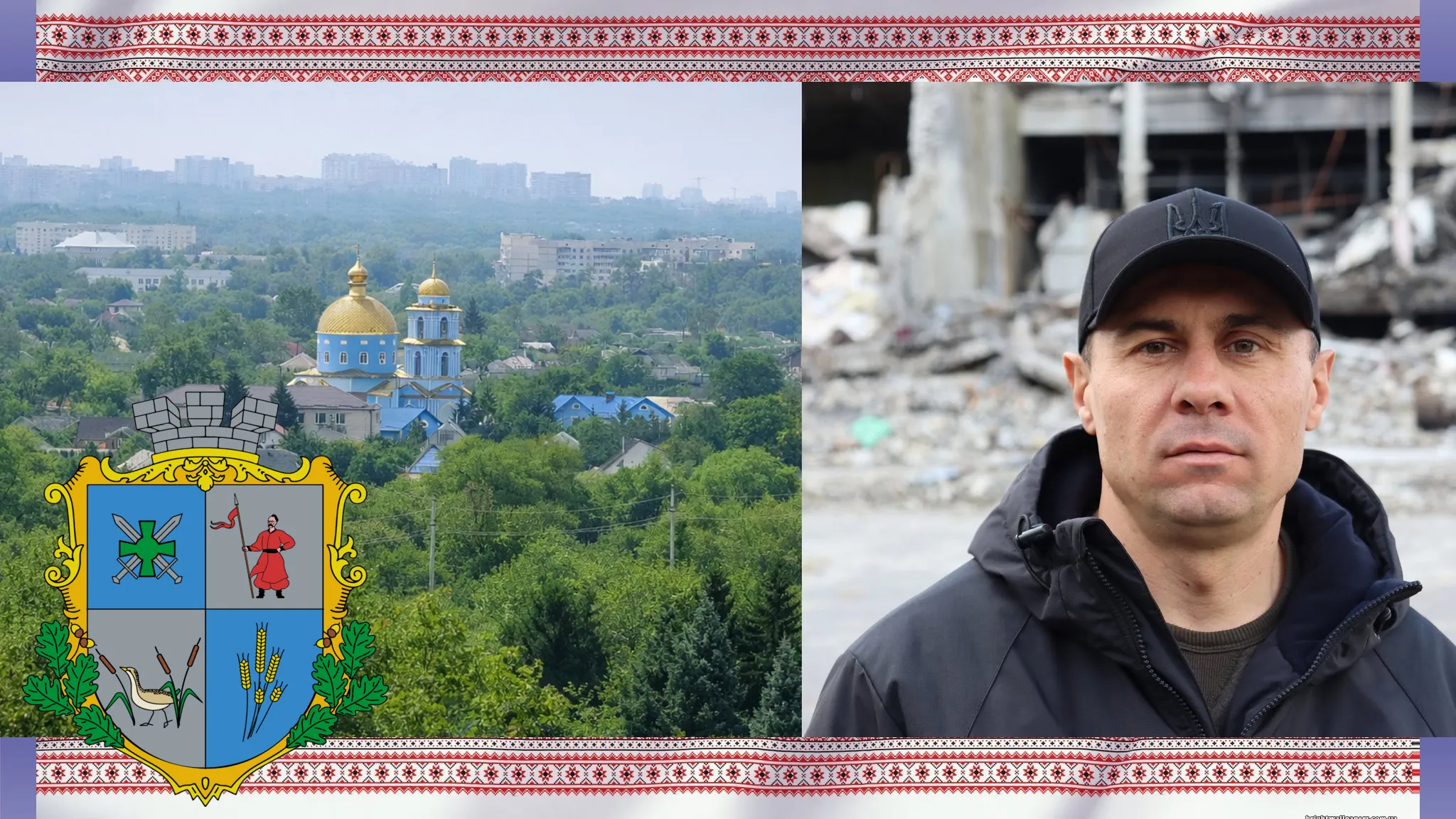
Collage by Olena Zelenina.
In the border area of the Kharkiv region, the security situation has reached a critical point: due to daily shelling, the use of enemy FPV drones, and the remote mining of civilian areas, a mandatory evacuation has been announced in the starostats (sub-districts) of the Derhachi community.
The enemy is technically upgrading its weapons and disguising explosives inside everyday items—such as cigarette packs or packages left on roadsides—turning an ordinary walk outside into a mortal risk.
As Vyacheslav Zadorenko, Head of the Derhachi City Military Administration, explained to journalist Oleksandr Shvets on the program Voice of the Community (a joint project of the Kharkiv Press Club and the Gromada Group network) , this is not a forced "eviction," but a measure to preserve what is most valuable—human life.
Border Tragedy:
Remote Mining and Evacuation Risks
The situation deteriorates week by week, especially in settlements located just a few kilometers from the border with the Russian Federation.
Active combat continues in Kozacha Lopan; electricity and gas supplies are completely absent in the village, yet around 30 local residents still remain on its territory.
In Slatyne, Bezruky, Ruska Lozova, and other settlements, regular strikes continue to destroy what remains of the infrastructure and housing stock.
Subtle remote mining has become a particularly dangerous threat. Explosives can detonate without even being stepped on—merely walking or driving nearby is enough to trigger them.
"We warn people: colder weather is ahead. Leaves on the trees will no longer conceal pedestrians, and smoke from chimney heating will expose inhabited houses to enemy drones. Remaining there is only a matter of time before a person becomes a target," warns Vyacheslav Zadorenko.
At the same time, a mandatory evacuation is not currently being announced in the city of Derhachi itself: the city functions, public utilities and medical services are working, public transport operates, and children study in a newly built underground educational facility.
Housing Certificates and Evacuation Geography:
Remote Damage Assessment
Under Fire Under the "eRecovery" (yeVidnovlennya) government program, the Derhachi community consistently ranks among the top five leaders in the Kharkiv region in terms of compensation provided for damaged and destroyed property. However, the process of documenting damage in the border region faces unprecedented security challenges.
In settlements such as Kozacha Lopan and Veterynarne, dispatching professional field experts or holding a special commission meeting directly on-site is life-threatening. To ensure people are not left without state support, a decision was made to transition the assessment process to remote inspection—specifically using drones.
However, operating drones in an active combat zone carries severe restrictions and must be strictly coordinated with the military:
"The enemy spots every drone launch—seeing where it takes off and where it returns. This places our defenders directly in harm's way. We understand these risks completely, but the defense forces cooperate and provide the necessary assistance wherever possible," notes Vyacheslav Zadorenko.
Currently, the remote assessment procedure is being launched in Veterynarne, which will allow local residents to receive housing certificates to purchase new homes.
Regarding evacuation destinations, the vast majority of displaced residents wish to stay as close as possible to their home region. Although some have relocated to Western Ukraine, most IDPs choose Kharkiv and neighboring communities—such as Pisochyn, Lyubotyn, and Solonytsivka—hoping to return home as soon as active fighting ceases.
Farmers Under the Sights of FPV Drones
Despite the fact that the vast majority of agricultural land is mined or under continuous shelling, four farming enterprises continue to operate in the community.
The battle for the harvest takes place in the literal sense: farmers take combines out into the fields while positioning guards with shotguns or observers around the perimeter to track approaching enemy FPV drones.
Part of the grain is successfully harvested and saved, even though occupiers systematically destroy storage hangars and machinery. Despite all hardships, farmers are in no hurry to leave—they retain their workforces and await victory to immediately begin clearing mines from their native land.
The Future Built Underground:
Education and Faith in Reconstruction
Even while operating in a daily survival mode, the Derhachi region looks ahead to the future. An underground school is already operational in the community, and an underground kindergarten—one of the first such facilities in Ukraine—is currently under construction.
Future plans include the construction of two more underground kindergartens, an additional underground school, an inclusive center, a rehabilitation complex for the wounded, and new sewage treatment facilities.
The community is actively preparing master plans and technical documentation according to European standards to secure funding from international institutions as soon as military actions end.
"We are preparing for large-scale post-war reconstruction to enter the Derhachi region. Our main goal is to protect lives and create conditions so that everyone who was forced to leave can return home," concluded Vyacheslav Zadorenko.
The experience of the Derhachi community demonstrates that under conditions of modern warfare, small border communities shoulder the heaviest burden—from securing defense along the front line to developing pioneering security solutions for the civilian population. It is here that the resilience of all Ukraine is forged.

Comments
Some more relevant news for now