





The Strength of Spirit: How the Izium Local History Museum Became a Center of Cultural Memory During the Occupation
All news | | 444 | Author: Elina Oshurko
Main article image on the Gromada Group site
How the Izium Local History Museum Continued to Operate Despite the Challenging Period of the Occupation of the City of Izium
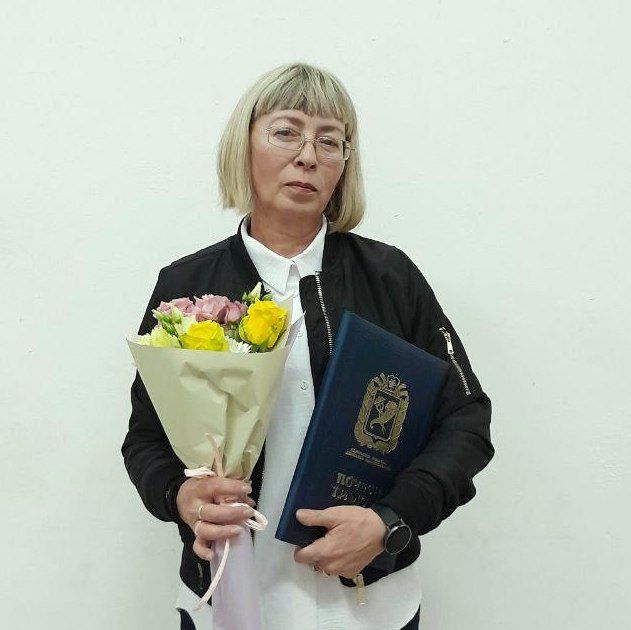
Every museum preserves our collective genetic memory, and museums themselves are safeguarded by devoted people such as Halyna Ivanova, Director of the M. V. Sibilov Izium Museum of Local History.
The museum was founded on January 14, 1920, at the initiative of the Izium local historian and archaeologist Mykola Sibilov, who was appointed its first director and curator. On May 20, 1920, the museum opened its doors to visitors.
From its establishment, the museum exhibition consisted of an art gallery and three departments: Natural History, History, and Revolutionary History. Later, an Archaeology Department was created. The museum received cultural treasures preserved from the military conflicts of 1918–1920, including part of the archives of the Izium city administration; items from noble estates such as rare books, paintings, and decorative artworks; military awards of the Cossacks of the Izium Regiment; paleontological and zoological collections from the Izium Real School; and mineral collections gathered in Izium County.
Among the most valuable acquisitions was a portrait of the 18th-century public figure and largest landowner in Izium County, A. O. Samborsky, painted by the Austrian portrait artist Johann Baptist Lampi. By 1921, the museum’s collection contained 1,039 exhibits. During 1920 alone, 3,815 visitors explored the museum’s collections.
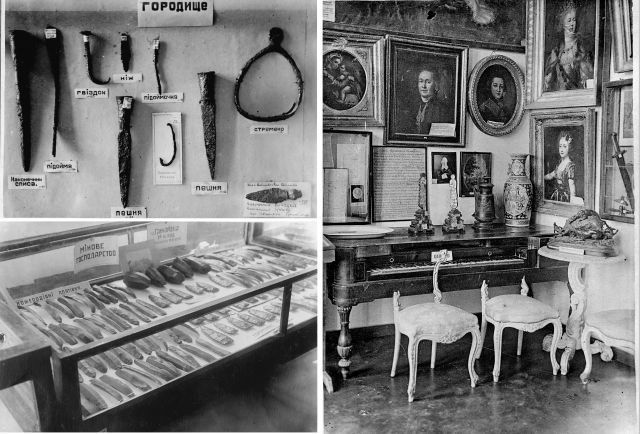
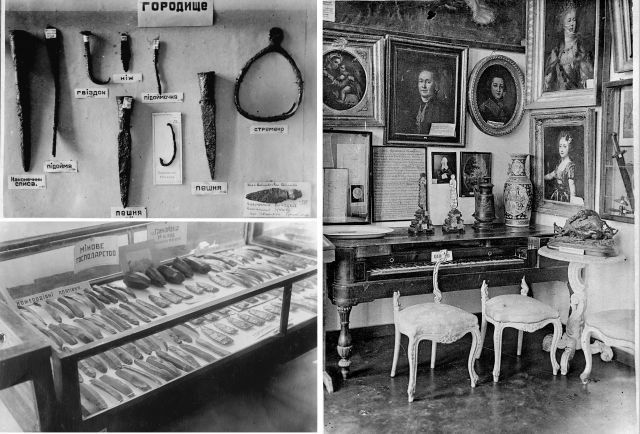
During the 1920s, the museum’s holdings expanded significantly thanks to archaeological expeditions conducted in the Izium region under the leadership of Oleksandr Fedorovsky, Petro Yefymenko, and Serhii Hamchenko. The museum also exhibited private archaeological collections belonging to forester Yu. V. Bohdanovych and engineer O. F. Zaporin. It published a series of local history collections and studies. Three years after the museum’s opening, Professor O. S. Fedorovsky wrote: “The Izium Museum is an example of outstanding cultural work dedicated to the study of local history.”
“Our museum is one of the oldest local history museums in the Slobozhanshchyna region. It was founded in 1920 by the distinguished local historian and archaeologist Mykola Vikentiiovych Sibilov, whose name the museum proudly bears. Throughout its history, the museum has experienced different periods. The 1920s and 1930s marked the flourishing of local history research. During that time, the museum’s collections were greatly enriched with tools and household items used by prehistoric people. Another major focus became the rescue of cultural valuables threatened by the aftermath of the Civil War. Part of the city administration archive was saved, and books, paintings, and works of art from noble estates were collected. Among the treasures transferred to the museum were a portrait of the renowned public figure A. A. Samborsky painted by the famous 18th-century portrait artist J. B. Lampi, valuable items from the estates of the Malynovskyi, Rosen, and Volkhovskyi families, a Gospel Book in a silver-gilt cover dating from 1707, military awards of the Cossacks of the Izium Regiment, and many other artifacts,” says Halyna Anatoliivna Ivanova, Director of the Museum.
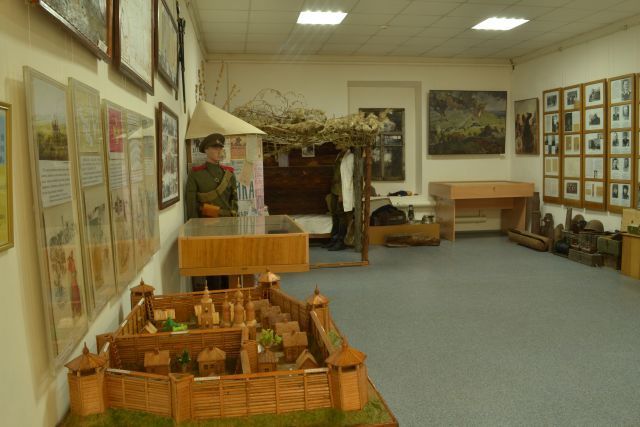
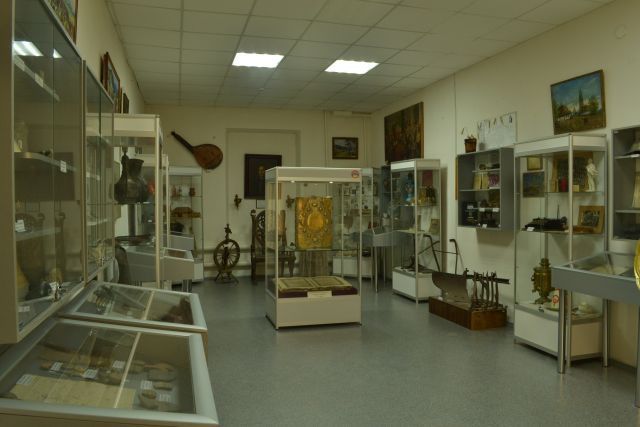
During the Second World War, part of the museum’s collection was irretrievably lost, and the museum building itself was destroyed. However, the staff managed to save the most valuable exhibits, which later became the foundation of a renewed collection. By 1947, the Izium Museum reopened to visitors in a renovated building originally constructed in the early nineteenth century.
The most difficult period in the museum’s history came during the occupation of the city. Looters stole many exhibits, the roof was damaged, walls were destroyed, windows were shattered, and electricity and heating were lost. The occupiers stole the director’s chair, several samovars, and decorative sabers from the museum.
“We collect these artifacts so that people will remember, so that no one will forget, and so that in two years no one can say that nothing happened here. That is why we gather these exhibits. We collect them, local people collect them, and together we preserve them. All our previous collections were evacuated for temporary safekeeping, so now we focus on creating new collections,” Halyna Ivanova explained.
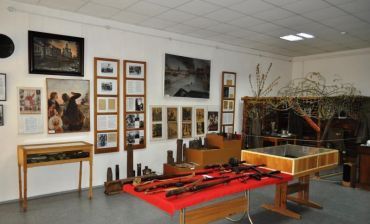
The museum possessed a rich collection containing many unique and authentic artifacts. Its holdings reflected the life, customs, and culture of the inhabitants of the Izium region in ancient times and included approximately 11,000 exhibits. Scholars consider the museum’s most valuable artifact to be the Gospel Book of 1707. This volume, decorated with an ornate silver and gilded cover, was presented to the Holy Transfiguration Cathedral in Izium by Tsar Peter I. Although many exhibits were stolen or damaged during the war and occupation, the Gospel Book was successfully saved and returned to the museum.
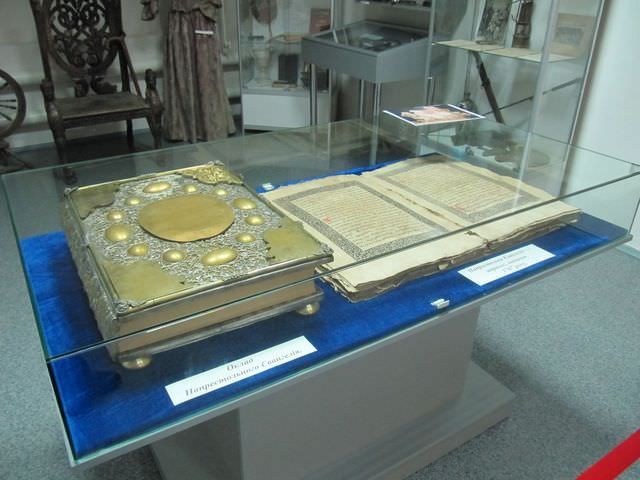
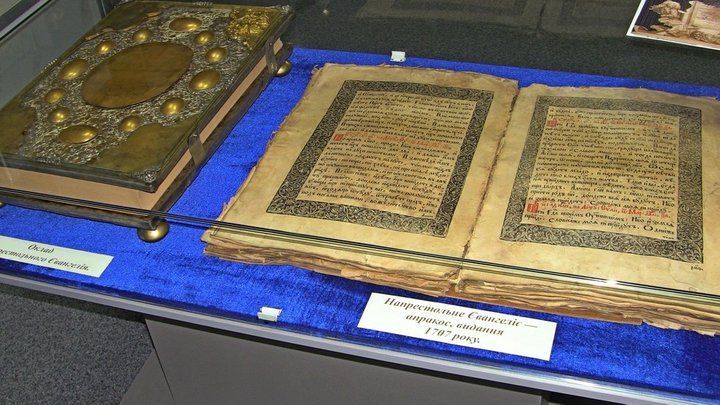
One of the museum’s researchers, Dina Lystopad, personally came to the museum under gunfire during artillery shelling and hid the Gospel Book. She later said that she concealed it so well that no one would ever find it. And it survived.
Today, the exhibits are stored in the secure repository of the Izium Museum of Local History, which is protected around the clock by the military.
The museum building remains in poor condition due to damage to the roof, and efforts are currently underway to preserve and stabilize the structure. Nevertheless, the entire collection and exhibition have survived intact, despite the severe looting suffered by the city.
Before Russia’s full-scale invasion of Ukraine, the museum displayed medieval artifacts, objects from the Cossack era, a numismatic collection, works by Serhiy Vasylkivsky and other artists, and many other historical treasures.
“Our entire museum collection has been preserved. We evacuated it to a safe place. At present, we are working on creating a new exhibition tentatively called the Museum of Occupation. We collect everything left behind by the Russian invaders, from propaganda leaflets they scattered to missile fragments. This is extremely important. We must preserve memory. The experience of occupation taught us one thing: we Ukrainians must live for Ukraine and for our state,” said Ivanova.
Speaking about the occupation, Halyna Ivanova reflected:
“Occupation is like rust. It slowly seeps into you. It penetrates so deeply that you begin to think it will last forever. People say Kharkiv is reinforced concrete, while Izium is like rubber. We absorbed everything that happened, but then suddenly it pushed back. Life began to recover. Yet the scars, the craters, and the pain will remain inside us for a very long time.”
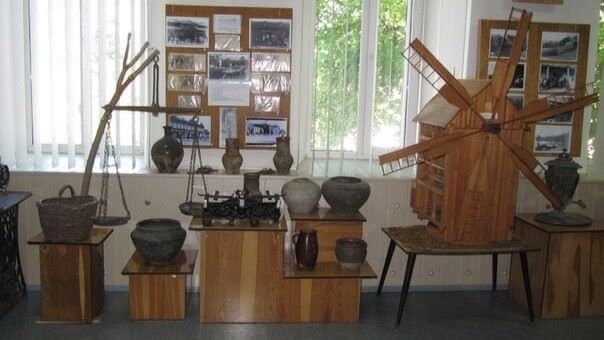
The collection of the future Museum of Occupation in Izium is being assembled jointly by local historians and the editorial staff of the local newspaper “Obrii Iziumshchyny,” with Halyna Ivanova actively participating in the effort.
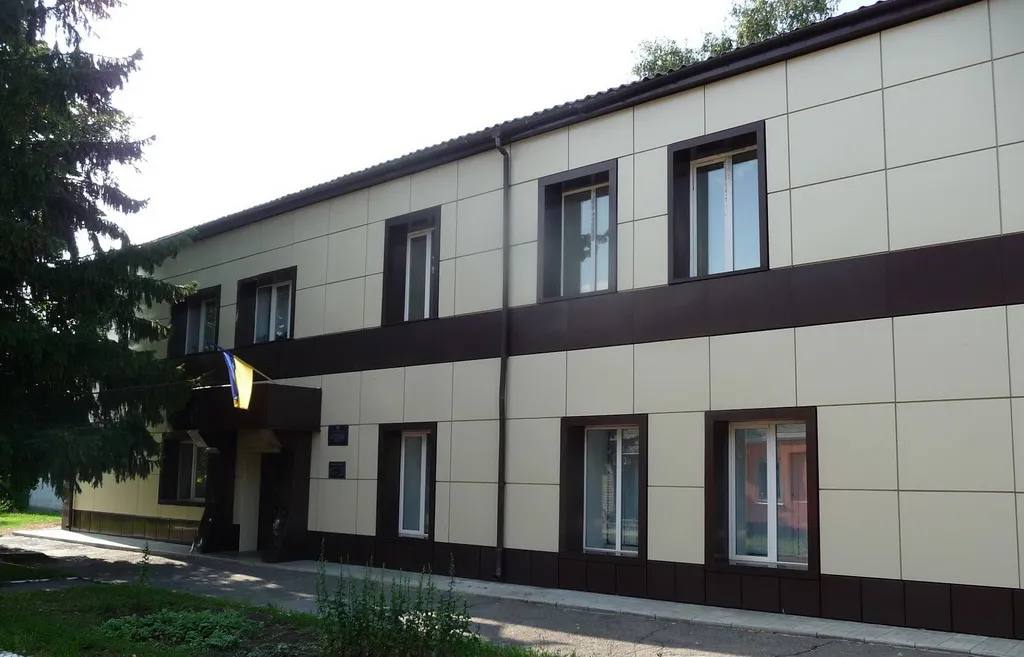
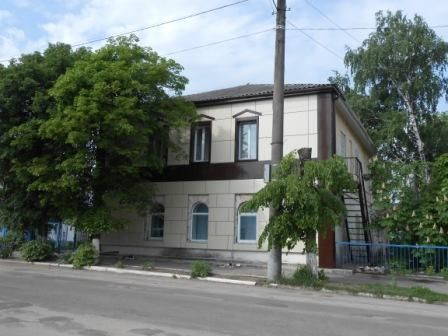
The exhibition of the M. V. Sibilov Izium Museum of Local History is housed in a reconstructed historic residential building dating from 1818.
The museum currently features exhibitions including:
• “The History of the Izium Region”
• “Izium as a County Town”
• The photography exhibition “Izium from a Bird’s-Eye View”
The museum organizes guided tours of Izium and provides scientific and methodological support to the city’s educational institutions.
Three permanent exhibition halls operate continuously:
**History of the Region (18th–19th Centuries)**
• Household items
• Portrait of A. O. Samborsky
• Landscapes by artists from Izium
**History of the Region (19th–20th Centuries)**
• Artifacts illustrating life in the Izium region in earlier times
• Collection of historical currency and banknotes
**Ethnographic Exhibition of Folk Crafts**
• Works created by artisans from Izium
The M. V. Sibilov Izium Museum of Local History has endured numerous hardships throughout its history, yet it continues to operate, preserve cultural heritage, and inspire visitors.

Comments
Some more relevant news for now