
"188 Trains with Livestock and Intelligentsia": How Ukraine's Demographics Are Being Rewritten
Blogs | | 330 | Author: Olena Zelenina
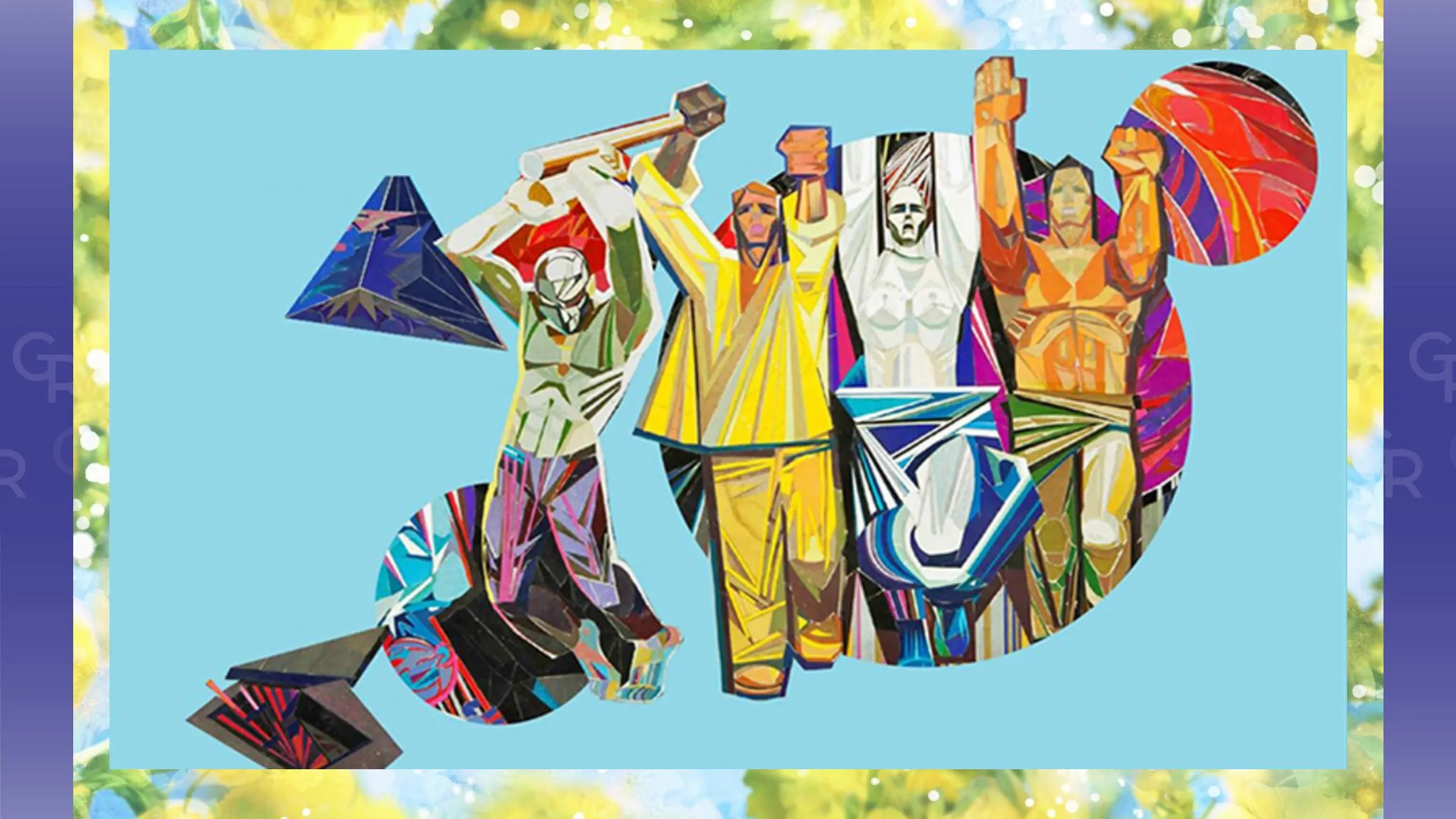
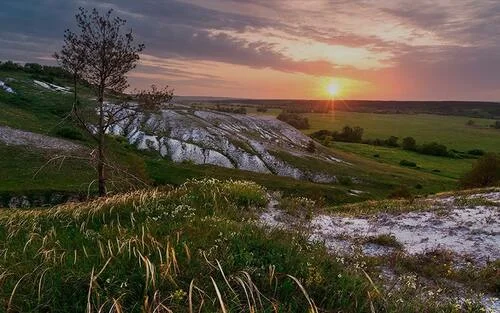
Collage by Olena Zelenina. Mosaic sketch (1968), created by Ukrainian monumental artists V. Zaretskyi, A. Horska, and V. Smirnov.
Social media feeds are once again buzzing with "uncomfortable truth." Users are reposting another viral screens hot with the avatar of "Svetlana Vetrova" with dramatic distress. Supposedly, here is your answer to the question "Where did the Russian language in Ukraine come from!"
The authors pompously cite "statistics for 1933," featuring "141 trains to Odesa Oblast," "125 trains of Russians to Dnipropetrovsk Oblast," and a record "188 trains to Kharkiv Oblast." And they were not bringing just anyone, but "Russian teachers and intelligentsia... along with cows, sheep, and agricultural equipment" straight into the "not yet cooled homes" of Ukrainians killed by starvation.
It sounds emotional, tear-jerking, and very convenient for quick conclusions.
Gromada found Svetlana Vetrova's account on Facebook. Such a "digital content creator" indeed exists. Except she has absolutely nothing to do with the post about trains of Russian-speaking resettlers in 1933.
She is a Petersburg singer-songwriter. And she has never had a single post about "trains with Russians" to the UkrSSR!
The funniest thing is that the authors of the forgery, having stolen the avatar and name from the account of an unsuspecting woman from Petersburg, portrayed her as a sincere Ukrainian patriot and didn't even bother to change the spelling of her name from Russian to Ukrainian.
This alone should have alerted people and given reason to suspect falsification. But no — the post went viral across social networks.
To discuss why "188 trains" could not have Russified even a single district, and what actually happened to the population of Ukraine in the 20th century, we speak with historian and human rights defender Volodymyr Ponomarenko.
Mr. Volodymyr, look at this masterpiece of network "archivism." Here they seriously tell us about hundreds of trains with "Russian teachers, livestock, and intelligentsia" being brought en masse in 1933 to settle abandoned homes. What mass resettlement of teachers with sheep are we talking about here?
— Oh, this is truly a classic of the genre: take a drop of a real document, add a bucket of propaganda fabrications, and season it with gypsy cows and intelligentsia in boxcars...
Regarding the essence: Resolution of the Council of People's Commissars of the USSR of October 25, 1933, on the resettlement of collective farmers to the regions of Ukraine depleted by the Holodomor indeed existed. But propaganda completely distorts its scale and consequences.
In the autumn of 1933, about 329 trains — roughly 21 thousand households, up to 117 thousand people — were sent from the RSFSR and BSSR to the UkrSSR. Against the background of multi-million losses from the Holodomor and the general population of Ukraine, this was merely a drop in the ocean.
But the main thing manipulators keep quiet about: most of these resettlers did not take root. According to reports of the resettlement committee, by the end of 1934, between 60% and 70% of those who arrived fled back to Russia due to unfamiliar conditions, ruin, and conflicts with locals!
Those few tens of thousands who remained could not physically Russify multi-million Ukraine. The roots of the Russian language in the industrial centers of the East and South were laid 100–150 years earlier — during the 19th-century industrialization.
Could population replacement have occurred on a mass scale after World War II? What is the exact demographic data regarding that period? How many residents of the UkrSSR left for evacuation in 1941, and how many returned in 1945–1946?
— Modern demographers, particularly the Institute of Demography of the NAS of Ukraine, provide clear figures. In 1941, 3.5–3.8 million people left the UkrSSR for the east. This flow is divided into three groups:
Organized evacuees: 1.9–2.0 million (factory workers, engineers, scientists, nomenclature).
Mobilized into the Red Army "on wheels": 1.1–1.3 million people (they were entered into train lists chaotically during retreat).
Spontaneous refugees: 500–600 thousand people.
Along with people, about 550 large industrial facilities and dozens of ferrous metallurgy enterprises were moved east from the UkrSSR.
Regarding the re-evacuation of 1944–1946: officially, 1.4–1.6 million people returned. Meaning about 500 thousand civilian evacuees did not return.
There were two reasons: 250–300 thousand died in the rear from severe conditions, typhus, and exhaustion, and another 200–250 thousand were directive-retained by the Stalinist leadership in the Urals and Siberia.
For example, tank plants in Nizhny Tagil and Chelyabinsk, created on the basis of the Kharkiv Locomotive Factory, refused to return personnel because defense industry in the east became a strategic priority.
The authorities decided to permanently anchor the military-industrial shield in the Urals and Siberia. The Kremlin did not want to lose cadres there. Furthermore, under the Decree of the Presidium of the Supreme Soviet of the USSR of December 26, 1941, defense workers were mobilized and had no right to change their workplace unauthorized under penalty of imprisonment.
But instead of them, in 1945–1946 another flow arrived in the UkrSSR — about 400–450 thousand specialists and workers from Russia. They came to rebuild the mines of Donbas, DniproHES, and factories of Zaporizhzhia and Kharkiv. Where exactly did they come from?
— Transporting people thousands of kilometers from Siberia to ruined Ukraine, where the 1946–1947 famine was raging and housing was lacking, was impractical. It was much easier to conduct recruitment in neighboring oblasts — Kursk, Voronezh, Bryansk, Smolensk.
But there is an important nuance here. From the perspective of population genetics (studies via Y-chromosome and autosomal markers), residents of Smolensk, Kursk, Belgorod, and Voronezh oblasts and Left-Bank Ukrainians constitute essentially a single gene pool.
Regarding Bryansk Oblast: in autosomal genetic maps (projects like Eurogenes), the Bryansk population forms a single genetic cluster with the population of North-Eastern Ukraine (Chernihiv, Sumy, Kharkiv oblasts).
Smolensk Oblast represents the lands of Krivichs and Radimichs, which for centuries were part of the Grand Duchy of Lithuania, where contacts with Ukrainians were never interrupted. And Kursk, Belgorod, and Voronezh form the historical space of Slobozhanshchyna, where Ukrainian Cossacks and local populations mixed for centuries.
When these workers arrived in Donbas or Kharkiv, they were not "strangers." They had a similar anthropological type and temperament. The only difference was the linguistic marker — they brought the Russian language with them (often with South Russian "h-guttural").
So the shift in the linguistic balance in Kharkiv and Donbas (as recorded by the 1959 census) was not the result of a forced population replacement of Ukrainians with Russians? Very interesting! To trace the real dynamics of the linguistic and ethnic composition of Donbas and Kharkiv, let's look at the results of the All-Union Population Censuses of 1939 (the last pre-war) and 1959 (the first post-war). What changes occurred here?
— Data from these censuses clearly show how significantly the population balance changed due to war, evacuation, post-war reconstruction, and urbanization.
It is important to separate two concepts captured by Soviet statistics: nationality (ethnic origin) and native language.
After the war, a strong gap emerged in the major industrial centers of Ukraine: the number of people identifying as Ukrainians remained high or even grew, but the proportion of those naming Russian as their native language increased rapidly.
Before the war, Kharkiv was the capital of the UkrSSR (until 1934) and a major intellectual and industrial center where the Ukrainization processes of the 1920s–1930s left a deep mark. However, war and post-war reconstruction sharply altered the situation.
1939: Ukrainians constituted about 48.5%, Russians — 33%, Jews — 15.5%.
1959: the proportion of Ukrainians rose to 48.9%, the proportion of Russians jumped to 40.4%, while the proportion of Jews dropped to 6% (a direct consequence of the Holocaust and non-return from evacuation).
While Ukrainian absolutely dominated in rural areas of the oblast (over 85–90%), in Kharkiv itself Russian became predominant in all spheres by 1959.
In 1959, about 64% of the entire population in Kharkiv named Russian as their native language. This happened because Russian became native for a significant portion of Kharkiv Ukrainians and remaining Jews in the city.
This was largely due to higher education, technical documentation at rebuilt plants (KhTZ, KhPZ / Malyshev Factory), and party administration being conducted exclusively in Russian.
Looking at today's terrible war, I involuntarily think that during World War II the destruction in Ukraine was also total: blown-up mines of Donbas, flooded DniproHES, destroyed factories of Kharkiv… Reconstruction required immense human capital. What role did returnees from evacuation and new resettlers play?
— In 1944–1946, people who left in 1941 under State Defense Committee plans returned to Ukraine. This was a highly qualified industrial elite.
Engineers and designers: they were the ones who brought back blueprints, technical documentation, and an understanding of technological chains. They knew how to rebuild factories "from scratch."
Cadre workers of higher grades: steelmakers, universal turners, mine masters. Without their experience, it was impossible to launch complex machinery arriving, including via repatriations from Germany.
They became the managerial and training core. They were relatively few (about 1.2–1.5 million people nationwide), but they were the ones launching open-hearth furnaces and restoring turbines.
Since cadre workers were critically scarce and work volumes were colossal, reliance was placed on mass recruitment of labor (orgnabors, Komsomol vouchers). People arriving from affected but less urbanized regions of Russia (Kursk, Voronezh, etc.) and from Ukrainian villages performed heavy, low-skilled labor:
Manually clearing millions of tons of rubble and brick.
Draining mines in Donbas flooded by the Nazis (working waist-deep in ice water).
Without this influx of "muscles," high-class engineers simply wouldn't have had the opportunity to deploy production.
It can be said that Ukraine's vast margin of industrial and economic strength was laid by the efforts of all these people. The UkrSSR became virtually the most economically and technologically advanced republic of the Soviet Union.
And later, their children created new residential microdistricts in cities (which Russian occupiers are bombing today, but cannot destroy!), scientific schools, universities, and those very high technologies that provide us with advantages in war.
I think all these people deserve a "thank you" rather than being reproached as "outsiders."
The topic of large-scale population movements in the 1940s clearly demonstrates how deep historical traumas and pragmatic decisions of the Soviet administrative-command system laid the demographic, linguistic, and industrial-economic landscape that continues to influence regions decades later.
When we look at what Russia is doing in the temporarily occupied territories today, historical analogies become terrifying. How do you assess the Kremlin's current actions in the context of these past demographic experiments?
— What is happening now is no longer just Soviet administrative bureaucracy or pragmatic "reconstruction." This is a wild 21st-century genocide.
Russia acts according to the worst templates of totalitarian regimes: first through torture, filtration camps, terror, and deportations, it burns out Ukrainian space and displaces millions of our people from their native land. And then onto these ashes, into homes and apartments still warm from shelling, it brings its "human material" en masse — security forces, officials, carpetbagger construction workers, and hunters of foreign property from Russia's most depressed corners.
Concurrently, hostile propaganda launches cynical fakes, scaring Ukrainians trapped under occupation with "deprivation of rights." Supposedly, after liberation, Ukraine will come to "strip citizenship" and conduct total repressions against everyone. This is a deliberate psychological operation — to drive people into helplessness and force submission.
If under the USSR linguistic assimilation was masked behind the facade of "industrial progress" and post-war reconstruction, today Russia commits an open war crime. Its sole purpose is to permanently erase Ukrainian identity, turn our flourishing cities into a faceless imperial province, and erase any trace of Ukraine.
But the Kremlin forgets the main lesson of history: as soon as the occupation machine collapses — all these forcibly built "demographic castles of sand" crumble into dust.

Comments
Some more relevant news for now