"Time Hears Us": Bristol, Izyum, and the Collapse of Anonymity. What Awaits Banksy After the Reveal?
Blogs | | 2,989 | Author: Olena Zelenina
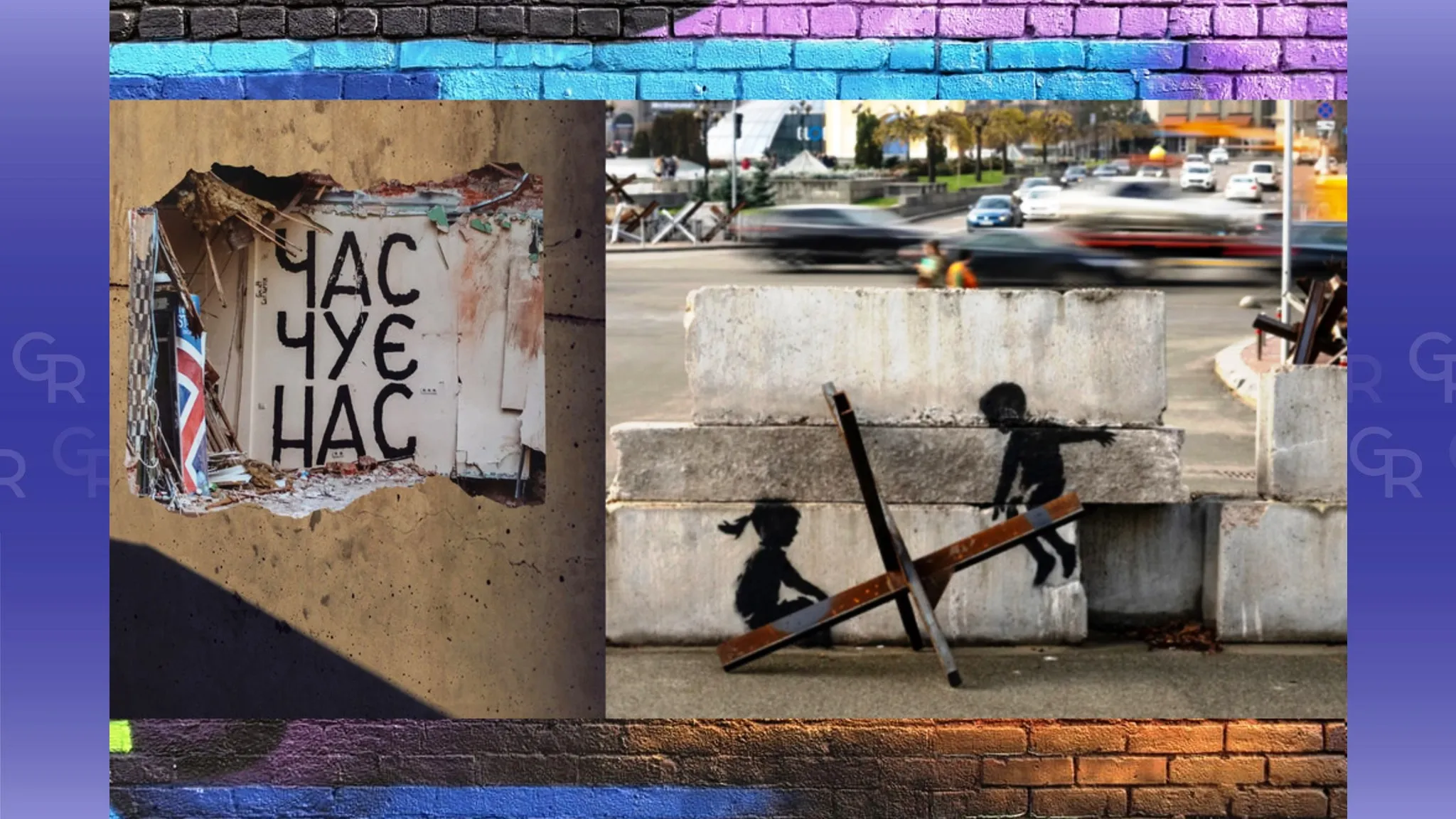
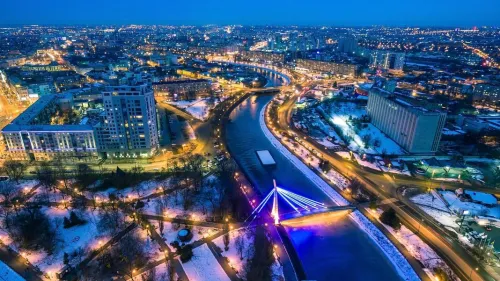
Collage by Olena Zelenina.
For decades, the world has tried to solve one of contemporary art's greatest mysteries: who is Banksy? Today, the veil of secrecy has effectively been lifted. But does the end of anonymity mean the end of Banksy? Or perhaps it is just the beginning of a new, even more radical transformation—from a street guerrilla to a witness of history.
Robin Banks:
A Pun That Became a Legend
The Swiss newspaper Neue Zürcher Zeitung (NZZ) notes that behind the mask of the anonymous artist hides Robin Gunningham, born in Bristol in 1973. His journey began with a wordplay: the nickname Robin Banks is not only consonant with "robbing banks" but also alludes to Robin Hood—a hero who takes from the rich to give to the poor.
The British newspaper The Guardian and Reuters confirm that legal battles over the rights to his works have effectively forced the artist out of the shadows.
But will he now turn into an "ordinary" art market star? Journalist Philip Meyer remarks that without the aura of mystery, his works risk becoming mere "expensive graffiti." However, Banksy knows how to turn "collapse" into triumph.
Recall 2018: his painting "Girl with Balloon" self-destructed via a built-in shredder right during a Sotheby’s auction.
The Kharkiv Trace:
A Boy on the Ruins of Izyum
Today, the Banksy myth is taking on a new, humanitarian form. After the de-occupation of the Kharkiv region in 2022, graffiti appeared in the battered city of Izyum: a small boy covering his face with his hands, weeping. The drawing on the remains of a Soviet monument was captured by world media.
Although Banksy officially confirmed only seven works in Ukraine (Kyiv, Borodyanka, Irpin, Hostomel), the work in Izyum became part of the same cultural mission. In Ukraine, the artist ceased to be just a "street guerrilla." He became a witness whose presence in dangerous zones is the ultimate expression of solidarity.
Global Banksy
vs. Local Hamlet
For the residents of the Kharkiv region, Banksy's story is inextricably intertwined with the work of our own street art hero—Hamlet Zinkivskyi. Here, a striking contrast emerges between a global brand and a person who became part of the city's defense.
Banksy built a wall of anonymity for years. Hamlet, on the contrary, never hid. He is the face of Kharkiv, a man you can meet on the street with a bucket of paint in the midst of war. His presence in a city under daily attack has become a form of open resistance.
His most powerful wartime work in the city center is the laconic inscription "Time hears us" (Chas chuie nas). These three words on a concrete wall have become a manifesto for Kharkivites who have learned to live in the "here and now."
When Art Becomes
Part of the Frontline
While Banksy draws the world's attention to ruined walls from the outside, Hamlet "heals" them from the within. His monochrome drawings on the OSB boards used to board up windows after strikes have turned Kharkiv into a vast gallery of memory and resilience. Every piece of plywood is a blank canvas for him, preventing the city from looking "dead."
A crucial fact: Hamlet doesn't just paint the war; he is part of the resistance, having joined the "Khartia" unit. This transforms his street art into something more than art—it is a soldier's diary left on the walls of his hometown.
From Pop Culture
to Historical Heritage
In Ukraine, Banksy took a significant step: money from the sale of his limited edition prints went to help victims.
In the era of AI, the physical presence of a person in a dangerous place is the only standard of honesty.
For Banksy, "revealing his hand" is not the end of a career, but a transition from "hype" to a historical mission. The mystery thriller has ended; the real story of how art becomes a weapon has begun. And while Banksy records the tragedy of Izyum, Hamlet continues to prove every day in Kharkiv that "Time hears us," and we hear the time.
Art has survived. And it no longer needs masks.

Comments
Some more relevant news for now