
Souls Bound in the Bundle of Life: How Grabiszynski Park Preserves the Secrets of the "Unforgotten" City
Blogs | | 552 | Author: Olena Zelenina
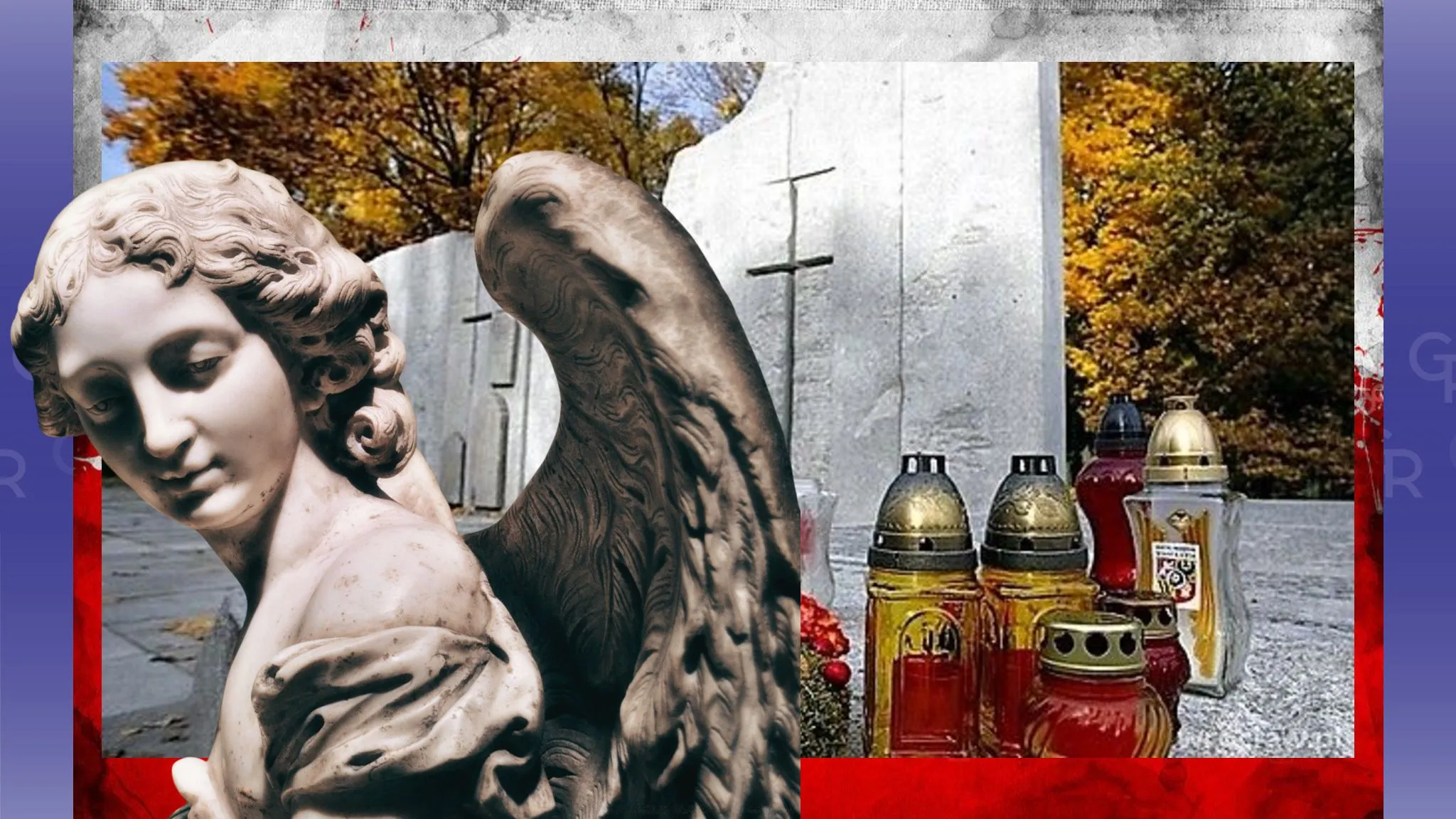
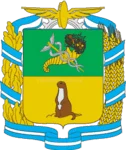
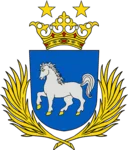
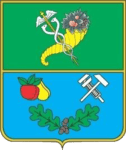
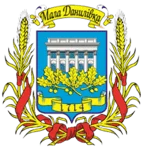
Collage by Olena Zelenina.
When you walk along the well-groomed paths of Grabiszynski Park in Wrocław, it is hard to believe under what fragile layer of calm we are actually stepping. This is not just a familiar green zone for morning jogs or quiet walks. This place is a silent witness to a massive drama, where an entire layer of the vanished German Breslau still rests under the feet and roots of century-old trees.
The Wall Rising from the Ashes
In 2008, on the site of the former pre-war crematorium, which was heavily damaged during the bloody siege of the fortress city in 1945, something majestic and painful was erected — the Monument of Common Memory (Monumentum Memoriae Communis). The memorial is intriguingly unusual; I had never seen anything like it in concept before! The authors called it the "Living Wall" (Żyjący Mur), and this is an incredible metaphor. Here, stone is not a dead decorative element. The embedded antique tombstones have preserved scars, chips, moss, and even traces of destruction. Passing by them, you seem to meet the souls of people who once walked these same streets, loved this city, and called it their home. This 60-meter granite wall united what history tried to erase from the face of the earth forever.
A Detective Story of Saving Memory
The most amazing thing in this story is how these slabs survived by a miracle at all. Imagine 1989, the village of Mirków near Wrocław. A warehouse crammed with two hundred antique German tombstones was accidentally discovered there. As it turned out later, a local stonemason had been engaged in "business on bones" for years: he bought up slabs from liquidated Wrocław cemeteries, chipped off the old German inscriptions, polished the stone anew, and resold these same slabs for new, Polish burials. Then the city bought up the surviving stones. It was these rescued fragments that became the basis of the Grabiszynski Memorial — a symbol of the fact that human memory cannot be completely ground down by the millstones of ideology.
"Gromada" Reference
Alojzy Jan Gryt (born 1937) is a famous Polish sculptor, architect, professor, and one of the most influential Wrocław artists of the second half of the 20th and early 21st centuries. Monument of Common Memory (2008): together with T. Tomaszewski and C. Wesołowski, Gryt created the lapidarium in Grabiszynski Park. He used his architectural genius to turn old German tombstones into a monumental 60-meter wall-monument. He is also the author of the Glass Fountain "Spring" (Zdrój) in the Market Square (1996) and the design of the Racławice Panorama pavilion (1984). For his achievements in art and contribution to culture, Alojzy Gryt was awarded the Knight's Cross of the Order of Polonia Restituta in 1996. He continues to be a landmark figure of Lower Silesian artistic modernism.
Destroyed Names of an Epoch:
What Did the City Lose?
Post-war Soviet and party ideology did not care about the scientific or cultural merits of the deceased if their monuments bore German inscriptions. The legendary Great Cemetery (Wielki Cmentarz), where the world-scale elite of Wrocław rested, suffered especially brutally!
Carl Gotthard Langhans (1732–1808) — a brilliant architect of the classicist era, whose most famous creation is known to everyone thanks to the Brandenburg Gate in Berlin. In Breslau, he designed the opera house and palaces. His lavish family crypt was demolished by bulldozers in 1957.
Ernst Chladni (1756–1827) — a German physicist and meteorite researcher, the founder of experimental acoustics, a musician. His grave at the Great Cemetery was simply leveled with the ground.
Adolf Anderssen (1818–1879) — the legendary "king of chess" of the 19th century, whose games are still studied by grandmasters. His original tombstone was destroyed, and only thanks to the efforts of the chess community were the remains transferred to another cemetery.
Karl von Holtei (1798–1880) — an outstanding poet, playwright, and patriot of Breslau, whose grave was brutally liquidated as part of the "odniemczanie" (de-germanization) campaign.
The Korn and Eichborn dynasties — these are two of the most influential German patrician families of Silesia, whose activities for over two centuries (from the 18th century to 1945) shaped the economic, cultural, and publishing life of the city. Their luxurious architectural mausoleums were blown up or dismantled for building materials in the 1960s. When you look at the memorial today, you realize: there are no personal names of these geniuses on the slabs of the Grabiszynski murals — the names of the destroyed necropolises themselves are carved there. This monument became a common mass grave for all whose achievements the communist authorities tried to erase from the city's memory.
Deciphering the Language of Eternity:
Contemplation by the Fallen Wall
A particularly poignant place of the memorial is its central part, where the wall seems to break and fall right to the ground. This fallen fragment with Hebrew inscriptions grips the heart — it tells of the tragedy of the Jews of Wrocław, whose rich world was first destroyed by the Holocaust and then finally trampled in the post-war decades. The epitaph ת.נ.צ.ב.ה — this abbreviation glimmers on almost every fragment under the erased words, an ancient blessing: "May his soul be bound in the bundle of life" with God. Even split in half by bulldozers, these slabs continue to whisper their stories to us.
"Breslau Looks from Underground"
The history of the liquidation of over a hundred Wrocław necropolises in the 1950s–1970s was typical. Back then, the Soviet and new Polish authorities pursued a policy of "de-germanization" (odniemczanie). Cemeteries were demolished with heavy machinery without any exhumations, covering the graves with earth and turning them into parks. But today Wrocław is doing something incredibly noble. Usually very quiet, almost deserted Grabiszynski Park fills with people on All Saints' Day who go to the Memorial to remember their ancestors. People from other countries come, in whose family traditions the names of grandfathers and great-grandfathers have been preserved. There are fewer and fewer direct relatives of those who lay in the liquidated cemeteries over time, but simply walking through the park with children or dogs, citizens stop by the wall. And a recent large-scale restoration carried out by municipal services carefully updated the half-erased inscriptions so that the names of former residents would never disappear in the fog of time. Grabiszynski Park remains a place of amazing, bright energy. Here, the past and present are so closely intertwined that it seems as if the alleys underfoot whisper: "A cemetery can be demolished, but memory — never."
Kharkiv Surprising and Eerie Analogies
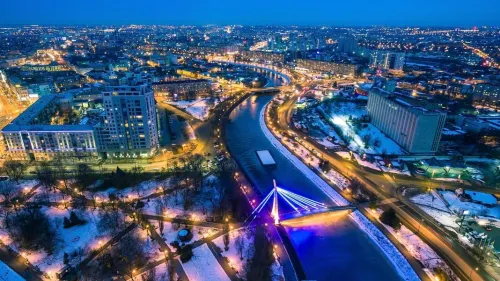
Standing by the Grabiszynski wall, you involuntarily transfer your thoughts to Kharkiv. The parallels in the Soviet attitude towards ancient necropolises in both cities are striking in their identity. The scenario was written under one carbon paper: declare the cemetery "ideologically hostile" or "neglected", blow up temples, pave graves into asphalt, and break parks, stadiums, or residential quarters on the bones. As if those who did this believed in their own immortality, like Lenin's immortality. Kharkiv pre-revolutionary necropolises hide no less dramatic urban secrets:
Kaplunivske Cemetery: a highland elite quarter on bones. It occupied a huge territory around modern Hryhoriya Skovorody Street (formerly Pushkinska) and Manizera Street (formerly Krasina), stretching deep towards Darvina Street. The cemetery was closed back in 1828 because the Nagirnyi district of Kharkiv was rapidly becoming the most expensive and prestigious. The land under the burials turned into "gold", and the city Duma could not allow it to "go to waste". Despite the ban, relatives were secretly buried in family crypts until the end of the 19th century. When total development of Manizera Street began in Soviet times (in particular, the construction of the KPI College and School No. 1), excavators massively fell into two- and three-tier underground crypts with wealthy burials. They were simply covered with cement or leveled without any exhumation.
The graves of the first rector of Kharkiv University, Ivan Ryzhsky (1759–1811), and prominent archpriest Stefan Prokopovych (died in 1841) dissolved without a trace here. During his life, he gained immense respect in the city, and historian Dmytro Bahalii mentioned him among the most prominent and influential representatives of the Kharkiv clergy of the 19th century.
The Mirror Stream: a "multi-story" underground necropolis and Khrushchev's whim. The symbol of Kharkiv — the Mirror Stream fountain gazebo — stands literally on human bones. At the temple cemetery near Myronosytska Church since 1701, due to a lack of land, people were buried in several tiers — "floors" on top of each other. In 1930, the church was blown up by the Bolsheviks, and a trolleybus depot in the open air was arranged in the dug-out pit during the war years. Only in the late 1940s, when party leader Nikita Khrushchev was outraged by the appearance of the dirty depot, it was demolished in a few months, and Victory Square was laid out.
Youth Park (Ivano-Usykrensky Necropolis): Kharkiv's twin of Grabiszyn. This was the most luxurious city cemetery — a real pantheon and open-air museum. In the 1970s, it was decided to turn it into Youth Park with the KPI sports complex. The authorities divided the dead into "correct" and "incorrect". They allowed the transfer of the ashes of only isolated figures to the 13th cemetery — Dmytro Bahalii, Oleksiy Beketov, Oleksandr Potebnia. All other tombstones — merchant, priestly, theatrical (in particular, the patrons Rubinstein or the luminaries of Kropyvnytsky Theater) — were demolished with bulldozers, and ancient marble was crushed into curbs. When digging the pit for the KPI pool, buckets brought old coffins and remains to the surface, causing shock among students.
"May the Soul Be Bound in the Bundle of Life"
The destroyed necropolises of Wrocław and Kharkiv are mirror reflections of one great tragedy of the 20th century. But Wrocław's example gives bright hope: even after decades of oblivion and attempts to erase a foreign culture, human memory is able to break through granite and return to us as carefully preserved stone. Of course, returning from Poland to Ukraine, I thought about the fact that it would be good for Kharkiv to follow Wrocław's example and create a similar place for all Kharkiv residents who lived in the city and glorified it for almost four centuries. This would be an act of human nobility and respect for ancestors. But I understand that in the next 50, and maybe 100 years, we will not care about the distant past! In every Ukrainian city, new Memorials will rise, dedicated to the tragedy of our people, which, unfortunately, we have to witness now...
More illustrations in the Ukrainian original.

Comments
Some more relevant news for now