




















A Nazi, Two Beauties, and the Mystery of a Nuclear Facility in Norway
Blogs | | 175 | Author: Олена Зеленіна
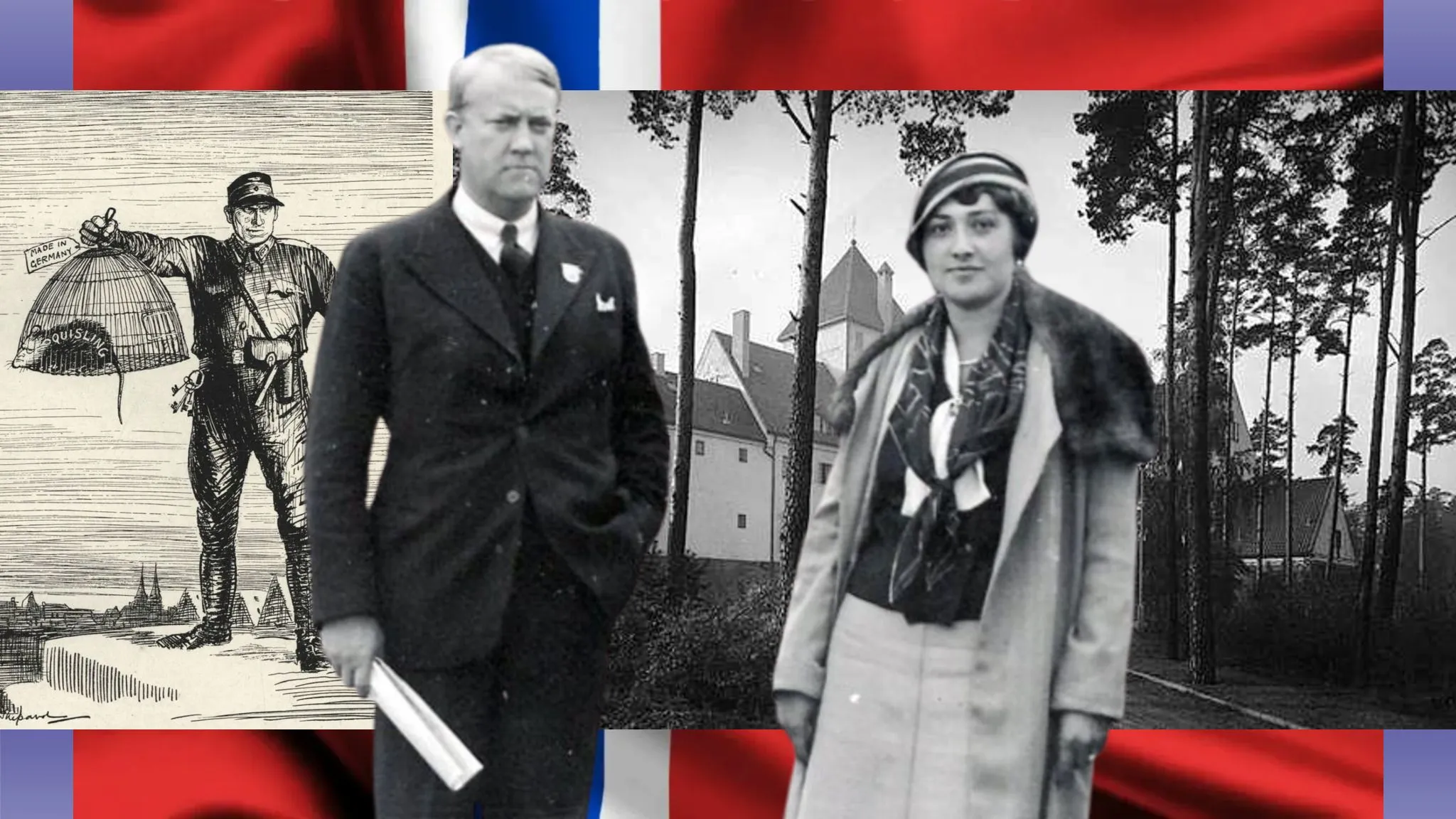
Collage by Olena Zelenina.
During long blackout evenings, reading by a flashlight about the bold sabotage by the Norwegian underground against Hitler's atomic bomb program, I repeatedly catch myself thinking about how fragile the line is between a great human feat and the dark abyss of personal ruin.
Nil Bascomb’s documentary work, The Winter Fortress—this specimen of narrative nonfiction unfolds before the reader as a tense spy thriller based exclusively on declassified archives, military reports, and personal diaries. Bascomb honestly shows the price of victory: the deaths of British paratroopers, torture in the Gestapo, and brutal repressions against the civilian population of the town of Rjukan.
All of this we did not know, just as we did not know the tragic history of the occupation of Norway and the Norwegian Resistance.
Looking at this through the prism of the present, it is impossible not to feel a painful echo.
The land of fjords once managed—with the help of Britain (which was itself bleeding under fascist bombs)—to repel the invaders, similar to how Ukraine is putting up an indomitable resistance today.
Yet behind every major geopolitical tragedy always stand specific human lives, broken in half by choices, ambitions, and betrayal.
This article draws a poignant parallel between the historical sabotage of Nazi Germany's heavy water plant in Norway during World War II and Ukraine’s current resistance against Russian aggression.
The narrative centers around Vidkun Quisling, the infamous Norwegian Nazi collaborator, and his entanglement with two women from Kharkiv: his first wife, Alexandra Voronina (later Yuryeva), whose memoirs reveal his psychological degradation, and his second wife, Maria Pasechnikova, who remained fanatically loyal to him until his execution.
The text explores Quisling’s ideological evolution from a humanitarian aid worker under Fridtjof Nansen to a puppet dictator, drawing striking parallels between his rhetoric and modern Kremlin propaganda (invoking "realism," fighting "Western decay," and accusing defenders of "useless bloodshed").
In the rhetoric of the occupation administration of Norway during World War II (Josef Terboven and Vidkun Quisling) and modern Russian officials and media figures (Sergey Lavrov and Vladimir Solovyov), one can trace common propaganda techniques: accusing the resisting side of senseless bloodshed, justifying intervention as "rescue" from external influence, and issuing ultimatum demands for submission.
Vidkun Quisling (from a radio address on April 9, 1940, on the day of Germany's invasion): The German government has no intention of violating Norway's independence... It has merely offered its help in order to spare the Norwegian people the fate of turning into a battleground for England's interests.
Sergey Lavrov (from speeches about the causes of the conflict in Ukraine): The West turned Ukraine into a springboard for containing Russia. We were forced to stand up in defense of people whom the Kyiv regime, incited by the West, was trying to strip of their culture, language, and history.
Josef Terboven (from a radio speech in Oslo, September 1940): King Haakon and his fugitive government have finally betrayed the interests of the Norwegian people by following the lead of London. They are deprived of any authority and right to speak on behalf of the country.
Sergey Lavrov (on Ukraine's leadership and the position of Western countries): As a result of an unconstitutional coup d'état, an illegitimate regime came to power in Kyiv, completely controlled by the West, which for the sake of its own geopolitical ambitions is ready to fight to the last Ukrainian.
Vidkun Quisling (from an appeal calling to lay down arms, April 1940): Any further resistance is not only futile, but outright criminal, since it leads only to the senseless destruction of lives and material values."
Vladimir Solovyov (from broadcasts on Russian television): The longer they resist, the less will remain of them. This madness must be stopped, our terms accepted, and a return made to a single space, otherwise cities will simply be wiped off the face of the earth.
Finally, the article reflects on the dangers of political complacency, the legacy of historical collaborators, and the stark reminders left by places like Villa Grande in Oslo, warning that the world must not forget the lessons of fascism and tyranny.
Read more in the Ukrainian edition....

Comments
Some more relevant news for now