

"First Shot" of a Terrible War: Gleiwitz 2.0 and Expired "Canned Goods"
Blogs | | 187 | Author: Olena Zelenina
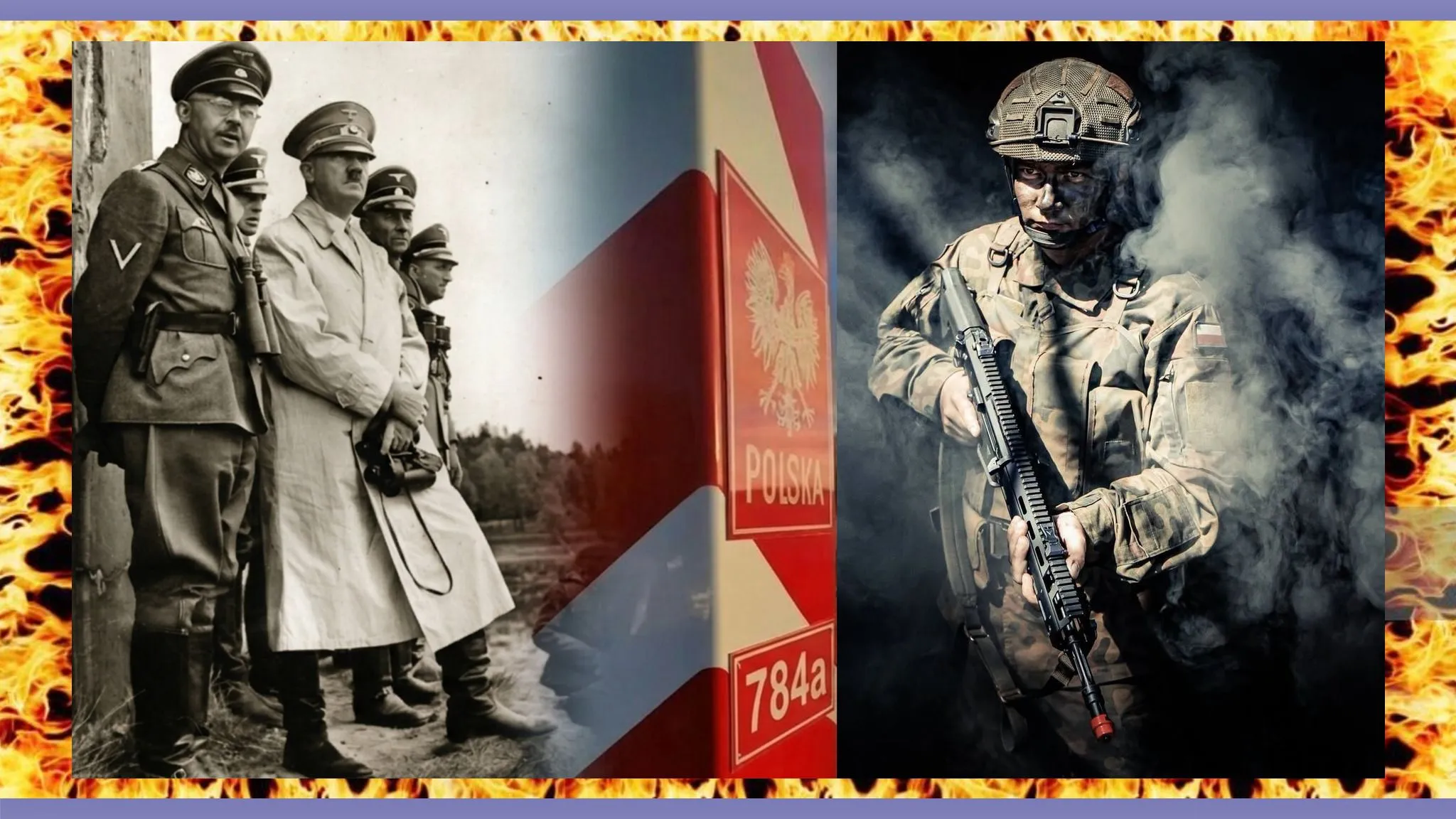
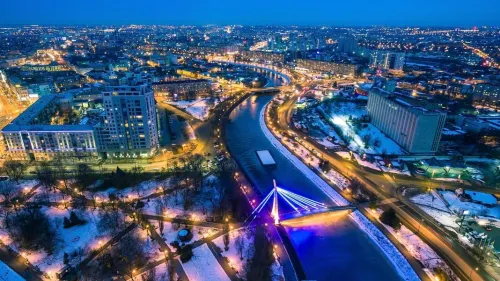
Collage by Olena Zelenina, based on archival and illustrative photos: Damian Łubkowski / MON.
"We need to make it look as if the Poles did it." It is with this phrase, spoken in August 1939 by RSHA chief Reinhard Heydrich to SS man Alfred Naujocks, that it is convenient to begin talking about what nearly happened on the Russian-Polish border in the autumn of 2026.
Last June, ahead of the NATO summit in Ankara, Poland’s Deputy Prime Minister and Minister of Foreign Affairs Radosław Sikorski directly recalled the 1939 Gleiwitz provocation and addressed the Kremlin: "That is how such regimes always act... Our message to Vladimir Putin is this: we know what you are planning, do not do this."
In late October — early November 2026, that exact scenario was nearly played out on the border with the Kaliningrad region.
According to an investigation by Poland’s Rzeczpospolita (picked up by Polsat News, RMF24, Onet, and Fakt), Russian military intelligence (GRU) was preparing a "false flag" sabotage operation near the border, with the possibility of staging an attack on its own territory as well.
The calculation was aimed at high-profile casualties among civilians or security forces, while the blame was planned to be pinned on... Ukraine — in order to drive a wedge between Warsaw and Kyiv and push the West toward scaling back aid to Ukraine.
Poland acted preemptively: following signals from allies, warnings from NATO Supreme Allied Commander Europe General Alexus Grynkewich, and the appearance of Russian intelligence officers across the border, around 180 police officers armed with long-barreled weapons, counterterrorism special forces, Internal Security Agency (ABW) officers, and troops from the elite GROM, NIL, and AGAT special units with drones were deployed to the area.
When on the night of November 3 "people with flashlights" were spotted near the border, instant mobilization forced the would-be saboteurs to retreat. Minister-Coordinator of Special Services Tomasz Siemoniak confirmed: the threat was assessed as entirely real, and tough deterrence was an adequate step. At the same time, answering journalists’ questions about whether Russians were preparing a terrorist attack at a mass-gathering site, Siemoniak kept to the intelligence services' framework: he emphasized that services act only when they see a real threat, and speak about confirmed facts when there is something to state — while the rest remains outside public details.
"Canned Goods"
and the Fabrication of War
Why do people in Warsaw and the media immediately compare this thwarted story to Gleiwitz (now Gliwice)?
Because, as a reminder, on August 31, 1939, the Nazis rehearsed that very same device of a false pretext (casus belli).
On August 22, Adolf Hitler at a meeting cynically explained his logic to the generals: "I will provide a propaganda pretext for starting the war, regardless of whether it is plausible. The victor will not be asked afterward whether he told the truth. In starting and waging a war, what matters is not right, but victory."
The operation was overseen by Heydrich (один из главных архитекторов Холокоста и руководитель нацистских спецслужб) and Gestapo chief Heinrich Müller, while the Gleiwitz action was called "Canned Goods" — because of the bodies of murdered concentration camp prisoners in Polish uniforms, who were meant to play the role of "dead attackers."
Gromada BACKGROUNDER
Naujocks’s group of 6–7 SD saboteurs, who spoke Polish fluently, operated according to a strict schedule:
16:00 — Heydrich’s phone call from Berlin and the code phrase "Grandmother died" as the signal to act that evening.
20:00 — an attack by "Silesian insurgents" dressed in civilian clothes on the radio station on the outskirts of Gleiwitz, shooting into the air, and locking three technicians and a guard in the basement.
Technical snag — Gleiwitz had no studio of its own; the station only relayed the signal from Breslau (Wrocław), so the saboteurs had to look for a "storm microphone" used for emergency weather warnings.
Around 20:05 — four minutes of a Polish-language broadcast amid gunfire: "Attention! Gleiwitz speaking. The radio station is in Polish hands..." with a call for an uprising against Germany.
Planted bodies — at the entrance, they left the body of 43-year-old Silesian German Franciszek Honiok, who was sympathetic to Poles (he had been arrested the day before, given a lethal injection, and shot with a coup de grâce), and later Müller’s men planted several more bodies of Dachau prisoners in Polish uniforms.
In total, on the night leading into September 1, more than two dozen stagings took place along the border — from attacks on the customs post in Hochlinden and a forester’s house in Pitschen to an attempt to capture the railway bridge in Dirschau (Tczew).
At 4:45 a.m., German troops crossed the border, and Hitler announced in the Reichstag: "Tonight Poland fired on our own territory for the first time using regular troops. From 5:45 a.m. we are returning fire!"
For the outside world, this performance was far too crude. American correspondent in Berlin William Shirer wrote in his diary:
None of us in Berlin believed a single word about the Poles attacking the radio station in Gleiwitz. The Nazis stitched this affair together with white thread, not even bothering to hide the seams.
Yet inside the country, the fake worked: as British historian Richard Evans noted, it gave the average German an illusion of "defense," while Norman Davies called Gleiwitz a textbook "false flag" provocation in which the aggressor puts on the mask of the victim.
Nuremberg and the Fate
of the "Man Who Started the War"
Full details of the staging surfaced at the Nuremberg Trials in 1945 — specifically in the sworn written testimony of Alfred Naujocks himself, who deserted in November 1944 and surrendered to the Americans.
U.S. Deputy Chief Prosecutor Robert Kempner characterized this episode harshly:
Gleiwitz became the first shot of World War II, fired not by a soldier, but by an SS executioner disguised in another uniform.
Yet punishment for the main executor turned out to be surprisingly mild. In 1946, Naujocks escaped from an internment camp in the British zone when extradition to Denmark was looming over reprisals against members of the Danish Resistance.
In 1947, he was captured again, and in 1950 sentenced in Denmark to 15 years — yet in that very same year he was amnestied and deported to West Germany (FRG).
He lived quietly in Hamburg, engaged in business, reportedly had contacts with the network of former SS members "ODESSA" (нем. Organisation der ehemaligen SS-Angehörigen) — an underground network of former SS members that likely existed after World War II to smuggle Nazi war criminals illegally from Europe to Latin American countries (primarily Argentina) and the
Middle East, as well as for their financial and legal protection.
In the early 1960s, Naujocks sold his memoirs for the book The Man Who Started the War.
He died of a heart attack on April 4, 1966, at age 54 — never having fully answered for launching a global catastrophe.
Hitler’s Copyists on the 2026
Border Comparing the thwarted provocation near the Kaliningrad region to Gleiwitz 1939 is not just a journalistic metaphor.
In Polish security circles and the media, they see the exact same elements: a "false flag" (now disguised as Ukrainian militants with documents or uniforms) and "expendable material" modeled on "Canned Goods" — when those who crossed the border could be eliminated by the organizers themselves in order to "find" "irrefutable Ukrainian evidence" on the bodies.
It was no accident that Sikorski warned Moscow about "Gliwice 1939" back in the summer, while Prime Minister Donald Tusk drew attention to the risks of the coming months.
Polish experts warn: a thwarted attempt does not mean the Kremlin will abandon such sabotage.
And here we return to the main point: can it really be that the Russian terrorist state is incapable of coming up with anything better than copying Hitler’s Germany?
It seems this is not accidental poverty of imagination, but a deliberate practice. Around the GRU and the Kremlin, a pool of copycat political technologists is clearly operating, consciously pulling time-tested Nazi templates — because in an era of instant media waves, even a crude fake can act as a detonator if it is not intercepted in time.
It is hard to believe that such a provocation was prepared without the knowledge of war criminal Putin. And if we assume that he was not informed after all — which is also quite possible, given how Putin has been lied to for years about the real situation on the battlefield — that means something even more alarming: the special operation was prepared by Russian intelligence services even fiercer and more headless than the Kremlin elders themselves.
In this "pincer" — between the senile paranoia of the leadership and the ungovernability of executors who are indifferent to the consequences of escalation on NATO’s border — the only effective safeguard is not persuasion, but an instant demonstration of strength and readiness to strike preemptively, just as the Poles did on the night of November 3.
More illustrations in the Ukrainian original.

Comments
Some more relevant news for now