




















"The most important things cannot be seen at once…". The Kharkiv pain in the life of the great director
Blogs | 07 March, 2026 at 13:15 | 2,901 | Author: Olena Zelenina
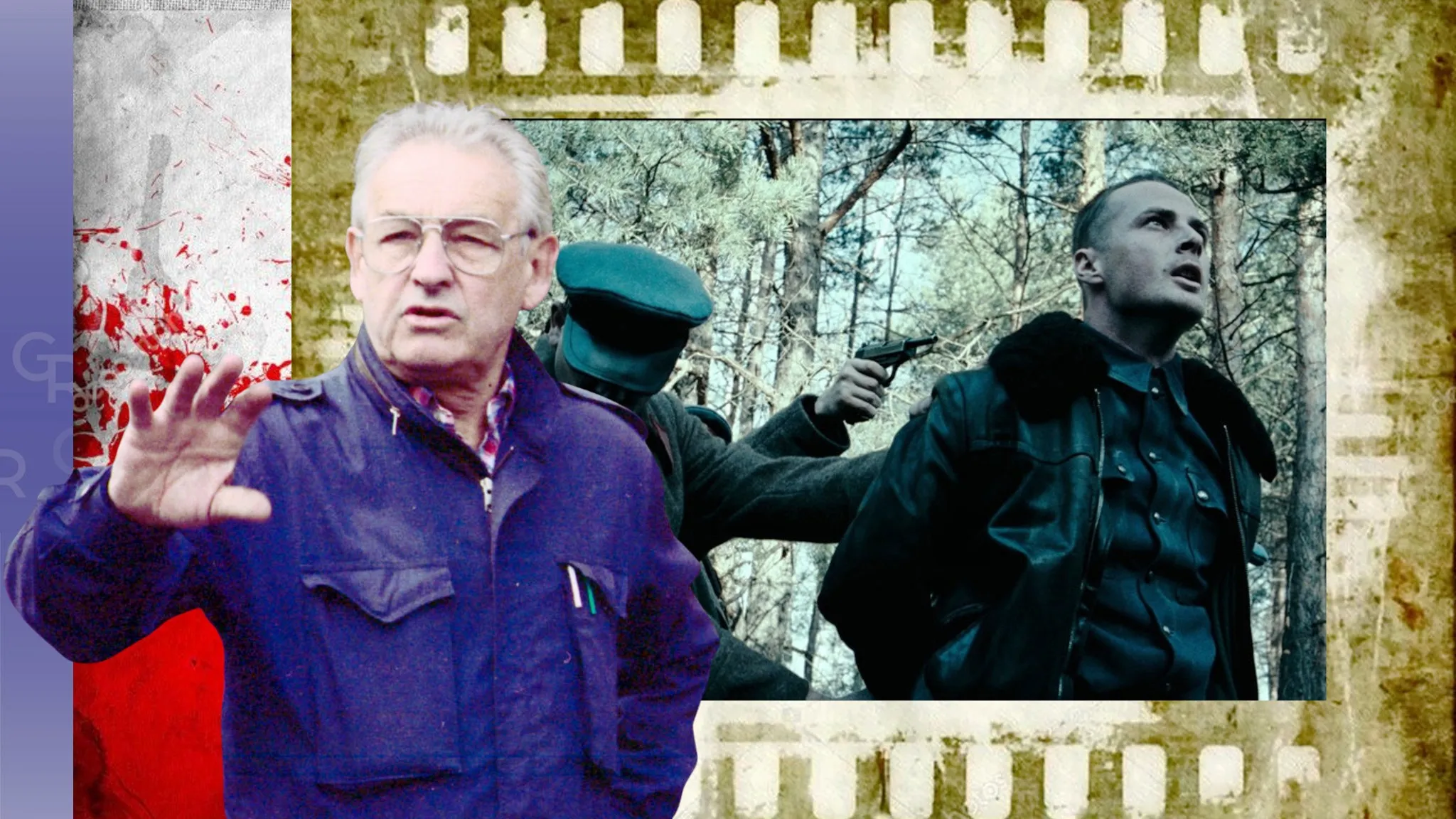
Collage by Olena Zelenina. Photo of Andrzej Wajda/ Forum.
The world celebrates the centenary of the birth of Andrzej Wajda (1926–2016) — a man who did not just make films, but created a visual chronicle of the Polish soul. A winner of an Oscar, the Palme d'Or, and the Golden Bear, Wajda carried a personal and national pain within him throughout his life, which found its ultimate expression in his most intimate film — "Katyń".
The Kharkiv Trace: The Director's Personal Tragedy For Andrzej Wajda, the Katyn crime was not just a paragraph from a history textbook. It was the story of his family.
His father, Jakub Wajda, a captain of the 72nd Infantry Regiment, was taken into Soviet captivity in 1939. For a long time, the family did not know his fate. The director's mother waited for her husband's return until the end of her days, hoping that he was among the survivors.
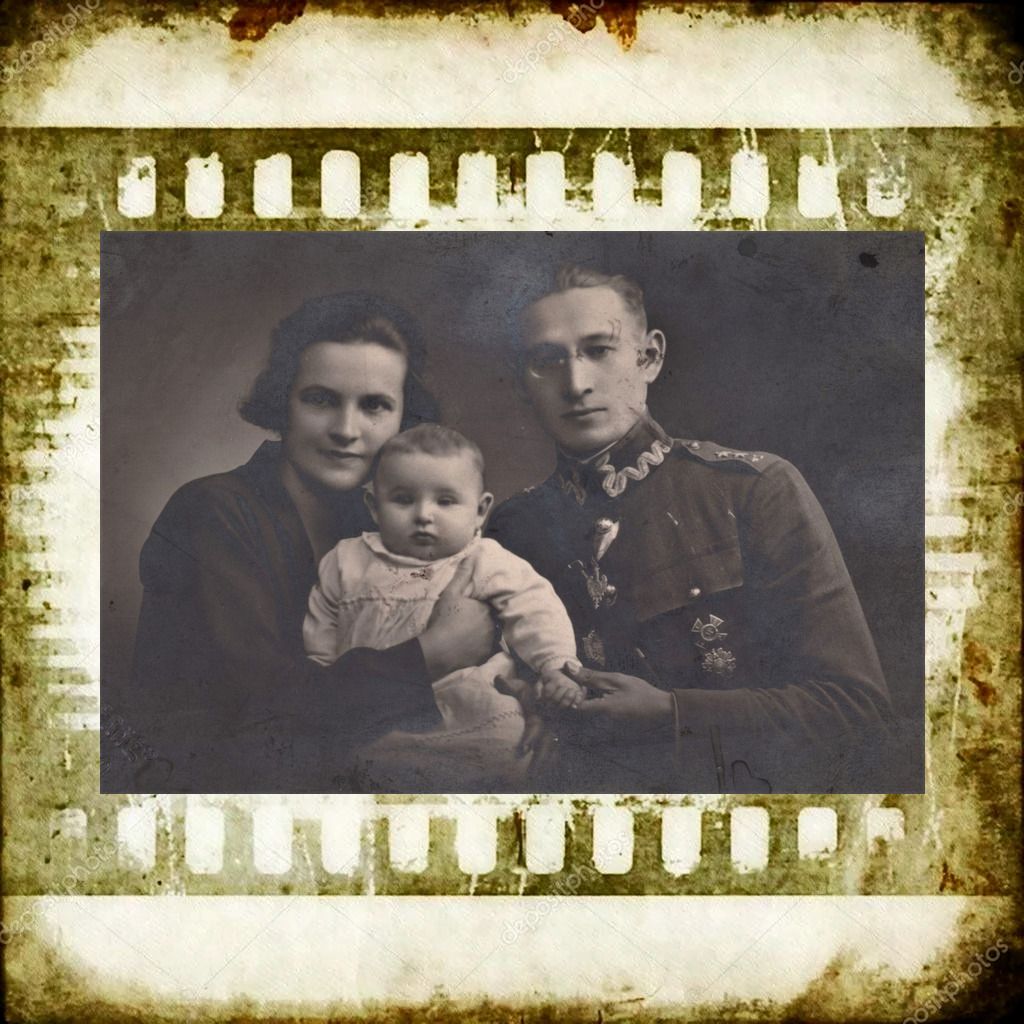
Jakub Wajda in the uniform of a captain of the Polish Army infantry with his wife Aniela and son Andrzej. Photo: Andrzej Wajda Archive.
The truth turned out to be merciless. Jakub Wajda was imprisoned in the Starobelsk camp and shot in April 1940 in the basements of the NKVD directorate in Kharkiv. He rests at the Cemetery of Victims of Totalitarianism in Piatykhatky.
This "Kharkiv wound" defined Wajda's creative mission: he felt it was his duty to become the voice of those whose mouths were forever closed by a bullet to the back of the head.
Quote: Polish cinema became more expressive, more metaphorical, partly because censorship brutally persecuted words and much could not be said directly. But if we found an artistic metaphor understandable to the viewer, images that hinted to them that we wanted to say something else, then the cinema acquired a completely different meaning.
Cinema of Despair and Hope Before approaching the theme of his father's death directly, Wajda spent decades analyzing the Polish fate through other images.
"Ashes and Diamonds" (1958) — the film that made actor Zbigniew Cybulski (1927–1967) an icon. The film describes a world after a catastrophe, in which a new order is just forming, and ideological conflict is inevitable. It is the tragedy of a generation that fought for the freedom of Poland but found itself "superfluous" in the new post-war reality. Wajda creates a universal parable: about historical turning points, about the necessity of making a difficult choice.
"Man of Marble" (1976) — the film that opens the famous trilogy, which also includes the Palme d'Or winner "Man of Iron" (1981) and "Walesa. Man of Hope" (2013). Of the three films, critics consider "Man of Marble" the greatest artistic achievement. Wajda captured the moment when the fear of an omnipotent regime was replaced by a sense of dignity.
"Danton" (1982) — a brilliant reflection on how a revolution devours its children, filmed at the height of martial law in Poland.
Quote: The most important things cannot be seen at once…
"Korczak" (1990) — an elegy for Dr. Janusz Korczak, his pupils, and all victims of the Holocaust.
The Road to Kharkiv: A Dialogue with His Father "Katyń" (2007): A duty fulfilled after decades. The film "Katyń" became a definitive work for Wajda. The director had been working toward it for nearly 70 years.
Quote: After the war and the German occupation, changes came. But not those we were waiting for. We expected to find ourselves on the side of the Western countries and fought for this in Poland and abroad. This was not how it was supposed to be, not how the war was supposed to end. This tragic global confrontation with reality made us too mature for our age. When I turned thirty, I believed — I had such a feeling then — as if everything I should know about life, I already knew. However, we became mature not only for ourselves but also for the films we made. These films were created from our awareness of what we experienced, what we saw, what happened in our lives.
Wajda intentionally made wives, mothers, and daughters the main protagonists — women who lived for years in "emptiness" and lies, not knowing the truth about the fate of their loved ones. This was a monument to his mother.
The execution scene in the NKVD basement (similar to the one where Jakub Wajda died in Kharkiv) is recognized as one of the most difficult and truthful in world cinema. Without music, under mechanical noise and the sound of gunshots, the director shows the methodical nature of the murder.
Although the film generalizes the tragedy of the Kozelsk, Ostashkov, and Starobelsk camps, for the Ukrainian and Polish viewer, it is inextricably linked with the Kharkiv Piatykhatky, where the earth is literally saturated with this history.
Memorial plaque in memory of Polish officers killed in Kharkiv. Source: Federation of Katyn Families.
Quote: I never thought I would live to see the moment when Poland would become free and I could make a film about Katyn. This was my most difficult duty.
Wajda's final film was "Afterimages" (Powidoki), the story of the artist Władysław Strzemiński — one of the leaders of Polish avant-gardism in the interwar period. The world premiere of the film took place on September 10, 2016, at the Toronto International Film Festival, and it was released on Polish screens on January 13, 2017 — after the director's death.
Wajda left us, leaving behind a cinema that teaches resistance and memory. His films are not just art; they are an antidote to oblivion. And the memorial in Kharkiv, where Captain Wajda rests, remains a place of silent dialogue between the great director and the father to whom he dedicated his life and his best film.

Comments
Some more relevant news for now