
























The Musketeer’s Secret: Scientists to Compare DNA of Found Skeleton with d’Artagnan’s Descendants
Life | | 549 | Author: By Olena Zelenina
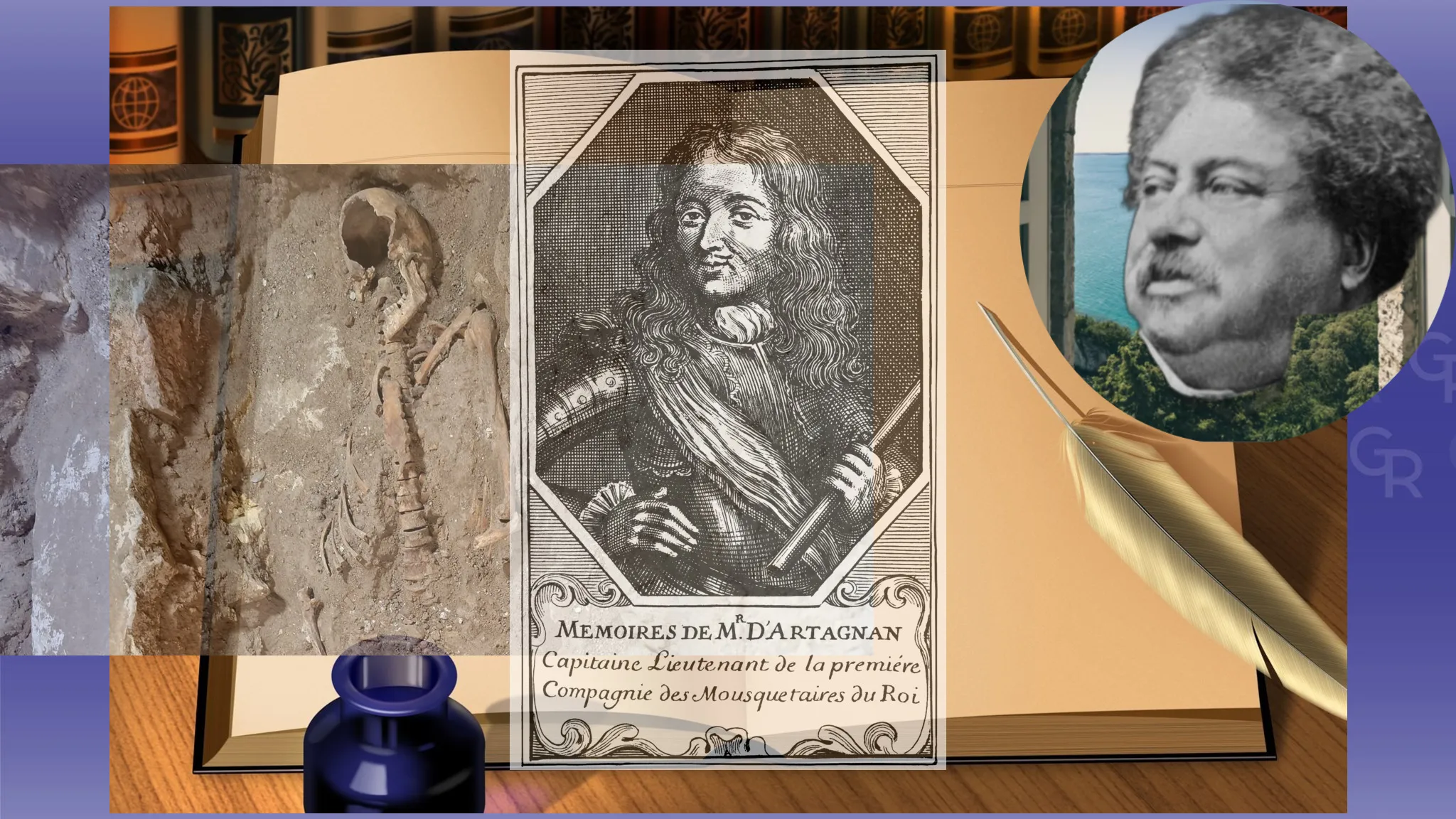
Collage by Olena Zelenina.
A skeleton has been discovered in a church in the city of Maastricht, believed to belong to the famous French musketeer, d’Artagnan.
Charles Ogier de Batz de Castelmore d’Artagnan was the inspiration for the hero of Alexandre Dumas’ novel The Three Musketeers. He was the right-hand man of Louis XIV and the commander of the Musketeers—an elite military corps guarding the French King.
He died in 1673 during the Siege of Maastricht while the French army was attempting to capture the city. It is believed he was fatally wounded in the throat or chest by a musket ball.
"Gromada" Reference
Profile While Alexandre Dumas turned him into an immortal fictional hero, the real d’Artagnan was an equally fascinating and influential figure of his time.
Origins: Born between 1611 and 1615 in Gascony (Castelmore Castle). He adopted the name d’Artagnan from his mother’s side, as it was more prestigious and helped his advancement at court.
Career: He began his service in the Musketeer company in the 1630s. After Cardinal Mazarin disbanded the company, he served as a courier and secret agent, traveling across Europe on clandestine missions.
The King’s Trusted Confidant: Louis XIV had absolute trust in d’Artagnan. The musketeer was even entrusted with the era's most high-profile arrest—detaining the powerful Minister of Finance, Nicolas Fouquet.
Military Rank: In 1667, he became the Captain-Lieutenant of the first company of Musketeers (effectively their commander). He also served as the Governor of Lille, where he proved to be a strict but fair administrator.
Death: He died on June 25, 1673, during the Siege of Maastricht. He personally led an attack on enemy fortifications and received a fatal musket wound to the head (or the chest, according to other accounts).
Interesting Fact: The real d’Artagnan became a musketeer much later than depicted in the books. He could not have participated in the "Queen’s Diamonds" affair (1625), as he was only a child at the time.
It is fascinating how history sometimes works better than any screenwriter: finding a legend beneath the sunken floor of an old church is a plot worthy of a new Dumas novel.
It was long believed that his body was not returned to France because the Battle of Maastricht was still raging, and the King decided to bury him on-site. The French army had set up camp near a village church close to Maastricht. It was suspected he was buried there, but evidence was non-existent—until now.
In February, a section of the church floor subsided. During restoration work, the soil was excavated, revealing human remains.
Key Evidence Supporting the Theory:
Location: The skeleton was found where the altar once stood. In those times, only royalty or highly important figures were buried beneath the altar.
Artifacts: Remains of a musket ball were found near the ribcage, and a French coin was discovered in the grave.
A DNA sample has been taken from the skeleton and sent to a laboratory in Munich. It will be compared with the DNA of the musketeer’s living descendants. Results are expected soon.
"I have lost d'Artagnan, whom I trusted completely and who excelled at everything," King Louis XIV wrote in a letter to his wife, Maria Theresa, after the death of his loyal commander.
Based on materials from the NOS portal (Netherlands).

Comments
Some more relevant news for now