

























1.5 Trillion Dollars for… "Our Father" and the Fable of the Mouse and the Lion
Articles | | 589 | Author: By Olena Zelenina, Olexandr Sydorenko (Caricature)
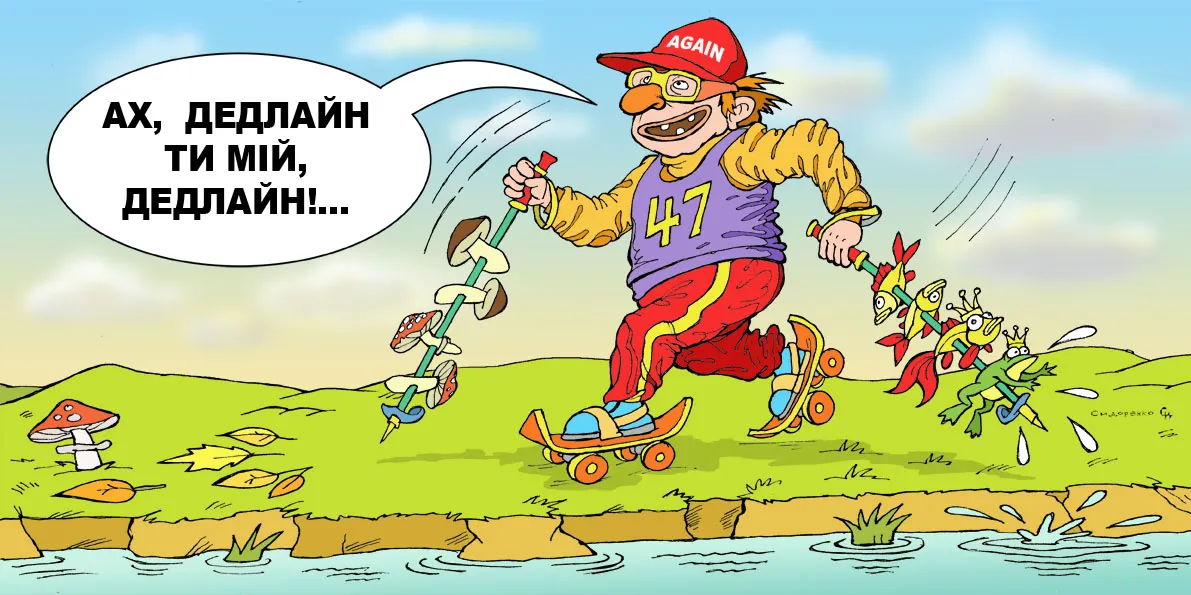
Caricature by Olexandr Sydorenko.
Easter... Pete Hegseth: — Prayer is our main weapon! Pope Leo XIV: — Then why are you asking Congress for a $1.5 trillion budget? Has "Our Father" become that expensive?
Jokes aside, when it comes to real iron and concrete, the Pentagon’s "prayer shield" faces a very down-to-earth but effective Iranian strategy. While Hegseth calls for faith, American intelligence records things that are hard to explain by divine providence alone.
The Iranian "Phoenix" and Labyrinths in the Rocks — The Telegraph
According to The Telegraph, Western intelligence is struck by Iran's "phenomenal" ability to repair missile bunkers within hours of U.S. airstrikes. Instead of smoldering craters, launch systems reappear almost instantly, neutralizing the effects of expensive Allied aerial campaigns. Iran’s strategic advantage lies in its "missile cities"—massive underground facilities carved into high-altitude mountain ranges.
This rugged terrain acts as natural "body armor" against the most powerful bunker-buster bombs, creating an "informational blindness" for Western reconnaissance as equipment is moved deeper into the mountain networks.
Saving Private Aviator: A Cinematic U.S. Operation — Associated Press
AP reports on a high-stakes Pentagon rescue of two F-15E crew members downed in Iran. While one pilot was recovered immediately, the weapons systems officer hid at an altitude of 2000 meters.
The CIA executed a brilliant deception, leaking false info that the pilot was being moved by land.
While Iranian forces searched "ghosts" on the roads, special forces extracted the officer from a mountain gorge. The operation highlighted the "silence as a weapon" tactic, with a 24-hour media blackout.
Conflicting narratives persist: Trump hails it as a triumph of American spirit, while Iranian state media (Sepahnews) broadcasts footage of downed Black Hawks and C-130s, claiming a total American defeat.
How Moscow Helps Tehran Cut the Lights in Israel — The Jerusalem Post
The Jerusalem Post, citing Ukrainian intelligence, reveals a deepening Russia-Iran military axis. Russia has reportedly provided Tehran with a list of 55 critical Israeli energy targets.
Moscow's analysts identified Israel’s unique vulnerability as an "energy island" that cannot import electricity from neighbors, meaning strikes on hubs like the Orot Rabin plant could trigger a total collapse. President Zelensky warned that Russia is "repaying its debt" for Shahed drones by providing Iran with Russian-made UAVs and battlefield data gathered in Ukraine.
Kyiv officials believe Moscow’s goal is to ignite a Middle East crisis to divert Western resources and attention away from the war in Ukraine.
The Fable of the Mouse and the Lion: Orbán’s Offer to Putin — Bloomberg
Bloomberg released a transcript of a call between Viktor Orbán and Vladimir Putin, where the Hungarian PM used an Aesopian metaphor, comparing himself to a mouse helping the Russian "lion" escape a hunter’s net. Orbán explicitly stated, "I am at your service on any matter."
Both leaders praised Donald Trump, comparing his style to a "tornado" or "tank." While Budapest promoted itself as a venue for a U.S.-Russia summit, the meeting failed due to Moscow’s maximalist demands. Even Putin reportedly expressed surprise at Hungary’s "flexible" position within the EU, though Brussels' patience is clearly wearing thin.
The Iron Lifeline: How Trains Hold Ukraine Together — NZZ
A brilliant reportage by Neue Zürcher Zeitung (NZZ) follows 11-year-old Artem on a 16-hour journey from Dnipro to Przemyśl, illustrating how the railway has become Ukraine's spiritual and physical backbone.
With the skies closed since 2022, Ukrzaliznytsia has become a symbol of national pride and resistance.
Despite over 1,100 attacks on infrastructure in 2025 alone, the system survives through the heroism of repair crews.
The report highlights Lozova as the new "Station of Lovers," where soldiers bid farewell to families—a role previously held by now-shuttered stations further east. For veterans and refugees alike, the train is the moral thread connecting the front line to the rear, and the past to a hopeful future.
"Guernica" as a Hostage — The Guardian
On the 90th anniversary of the Guernica bombing, a political duel has erupted in Spain over Picasso's masterpiece, The Guardian reports.
The Basque government requested a temporary transfer of the painting to Bilbao, arguing the symbol of their national pain should return home for six months.
Madrid’s central government flatly refused, with the Mayor of Madrid dismissed the request as "provincial thinking."
While the Museum Reina Sofía claims the canvas is too fragile to move, the real issue is political: whoever holds Guernica holds the right to interpret Spanish history. It is a striking paradox: a work created to protest aerial bombardment has itself become a target of political "shelling."
Read more in the Ukrainian edition....

Comments
Some more relevant news for now