








Four Years of the Great War in the Kyinska Hromada: From Destroyed Houses to Self-Owned Solar Energy
Articles | | 1,694 | Author: Olena Zelenina
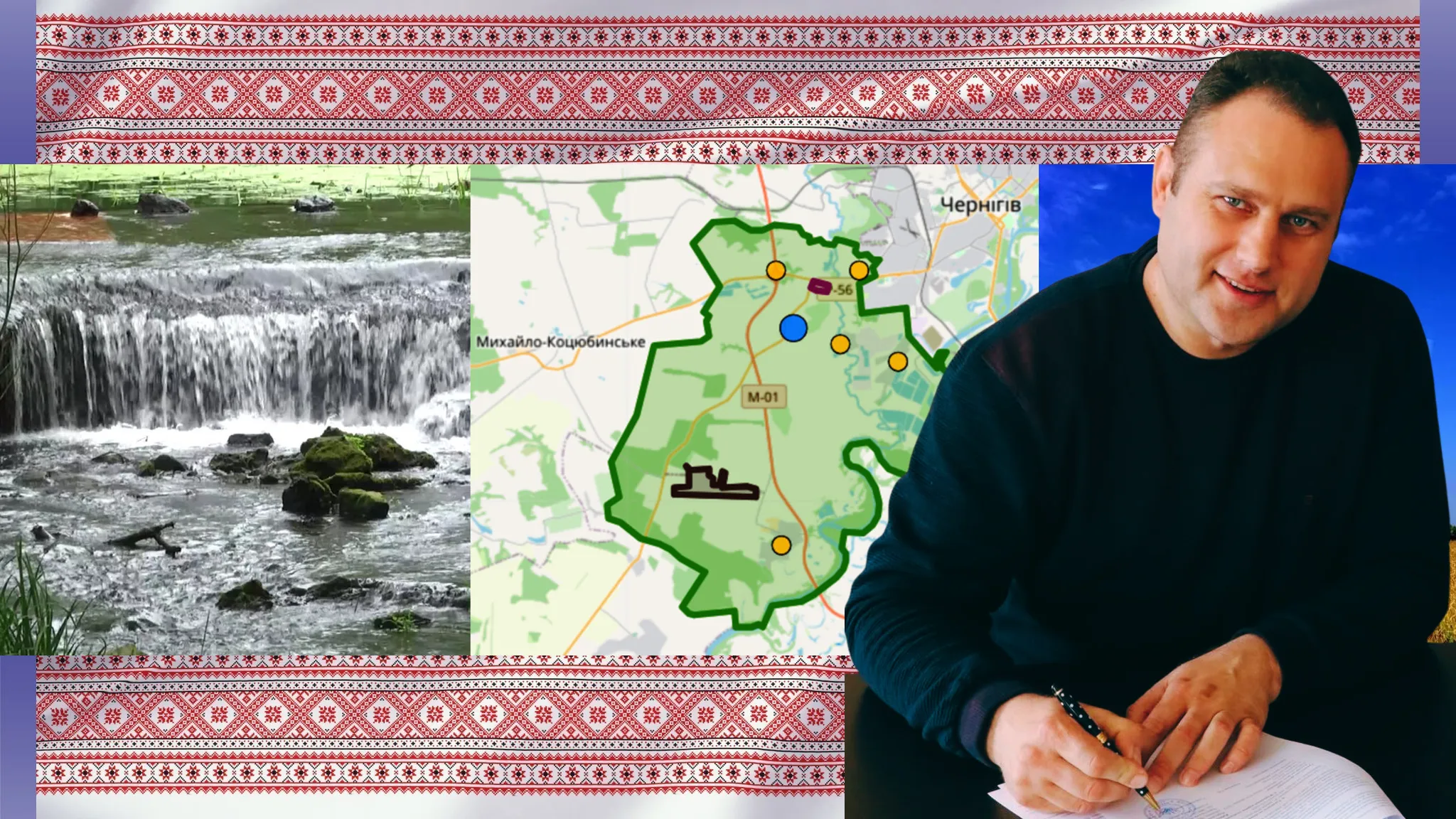
Collage by Olena Zelenina.
For the Kyinska hromada, which borders Chernihiv, the beginning of the full-scale invasion turned into a severe ordeal. The villages found themselves under shelling on the front line: more than 1,300 damaged households, a mutilated social sphere, and ashes instead of 68 homes. Back then, only a few millions remained in the budget, and the local authorities simply did not know what to grab first.
On how today, despite the proximity to the border and daily challenges, the community is rebuilding itself, learning to sort waste, and providing itself with light, told the head of the Kyinska TG Andriy Holovach in the program "Golos Hromady" (Voice of the Community) — a joint project of the local media network of Ukraine "Gromada Group" and the Kharkiv Press Club.
Summary
Demographic & Medical Challenges: The community returned to a population of ~6,000 (down slightly from 6,500). However, the demographic trend is highly alarming, with 70 deaths against only 10 births last year due to severe frontline stress and uncertainty. Healthcare faces critical staff shortages; no medical interns arrived this year. The local leadership is currently trying to claim an abandoned property to renovate it and offer free housing as an incentive to attract young doctors.
Energy Decentralization: Reversing the impact of winter blackouts, the hromada successfully installed solar panels, backup generators, and batteries on two main water pumping stations through international funds. The village council itself is completely autonomous on solar energy from Monday to Thursday. Additionally, a local lyceum underwent a 65-million UAH deep energy modernization, allowing students to study comfortably in warm rooms during bitter winter freezes.
Budget Growth: From a critical low of 16 million UAH in 2022, the hromada's budget quadrupled to 63 million UAH by 2025. This was achieved by systematically raising agricultural land lease rates to the maximum 12%, auditing hidden farming lands, and registering new businesses locally.
Waste Management Reform: Funded by the UNDP, the hromada distributed 6,000 color-coded sorting bins directly to households. While the logistics are operational, the main obstacle is the mindset of some residents who dump waste illegally. To counter this, the council offers financial rewards for reporting illegal dumpers. They are also launching a school participatory budget to teach children civic responsibility.
The Power of Small Communities: The head emphasizes that smaller hromadas possess crucial flexibility during wartime because leaders know every facility intimately, cutting through bureaucratic red tape when coordinating with international donors.
Read more in the Ukrainian edition....

Comments
Some more relevant news for now