



















Energy Salvation: Is There a Chance for Ukrainian Cities to Survive the Winter?
Articles | | 1,969 | Author: Olena Zelenina
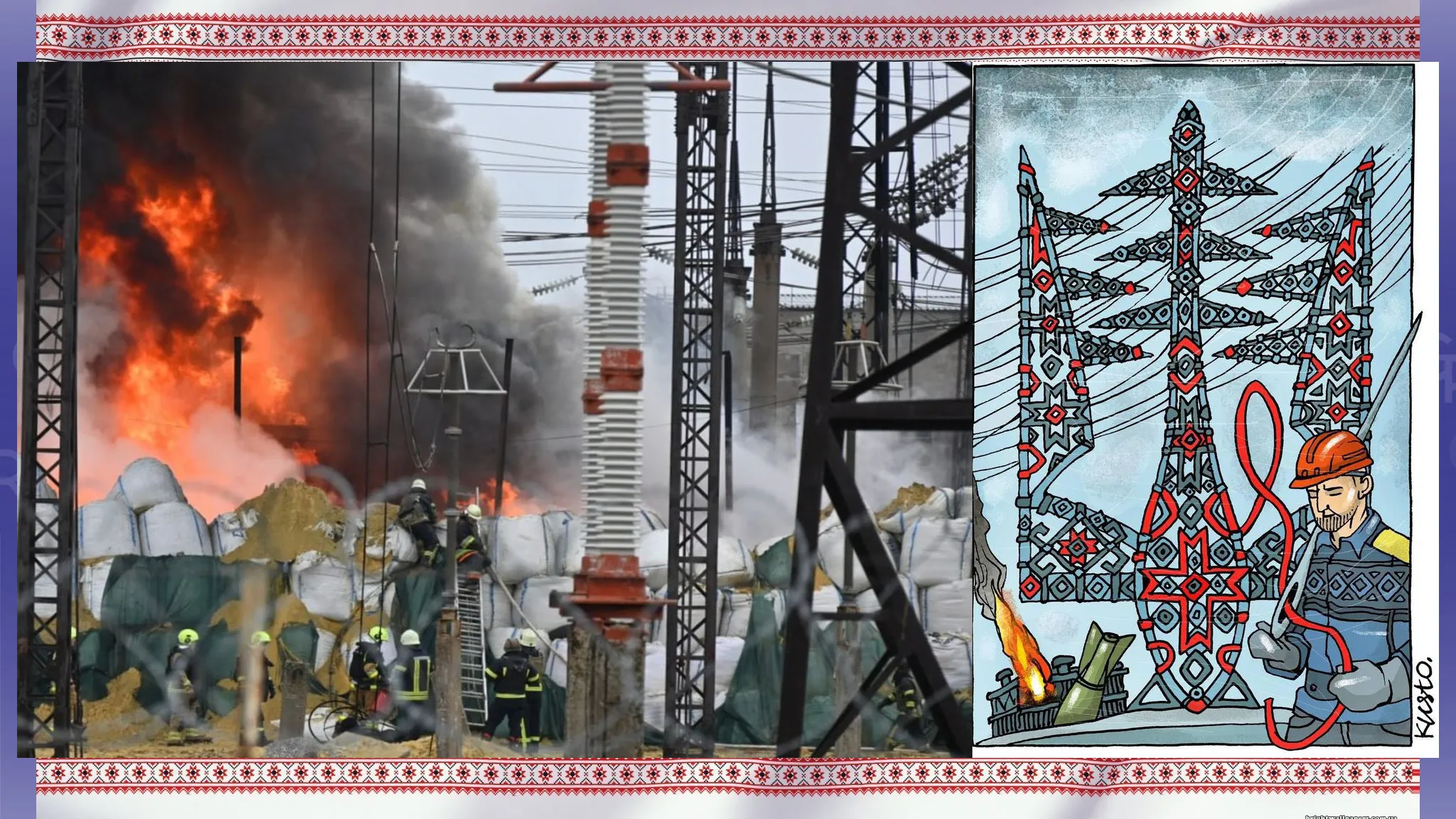
Collage by Olena Zelenina. Graphics by Oleksiy Kustovskyi. Photo: Ukrenergo.
Russian missiles and drones have finally buried the Soviet concept of centralized energy. Giant TPPs (Thermal Power Plants) and CHPs (Combined Heat and Power plants), which were once the pride of industrialization, have turned into convenient, almost defenseless targets. While big politics searches for global solutions, the salvation of Ukrainian cities has found itself in the hands of the communities themselves.
This is a battle for light and heat, where every mayor is a strategist, and every modular boiler house is a fortress. Will we manage to rebuild the system before the first frosts, and what spokes are being put in our wheels by our own bureaucracy?
This was discussed in the author's program of journalist Oleksandr Shvets "Voice of the Community"
(a joint project of the Kharkiv Press Club and the network of local media "Hromada Group").
Summary of the Discussion:
The destruction of Ukraine's large centralized power plants by Russian attacks has forced a rapid shift toward energy decentralization. Experts and local officials emphasize that modernizing old Soviet systems (such as switching from 6 kV to 0.4 kV power configurations) and building local "energy islands" via block-modular boiler houses and cogeneration units are vital for city survival. Small communities, like Bohodukhiv, are successfully utilizing solar energy with battery storage to remain fully autonomous during blackouts.
However, three major obstacles slow down this transition: a severe shortage of qualified technical personnel, a lack of project management capacity in smaller municipalities to secure foreign funding, and rigid bureaucratic regulations that prevent communities from easily selling excess energy or distributing electricity locally.
Read more in the Ukrainian edition....

Comments
Some more relevant news for now