











Unconquered Borderland: Life Underground and Mom's Borscht under the Sounds of War
Articles | | 222 | Author: Olena Zelenina
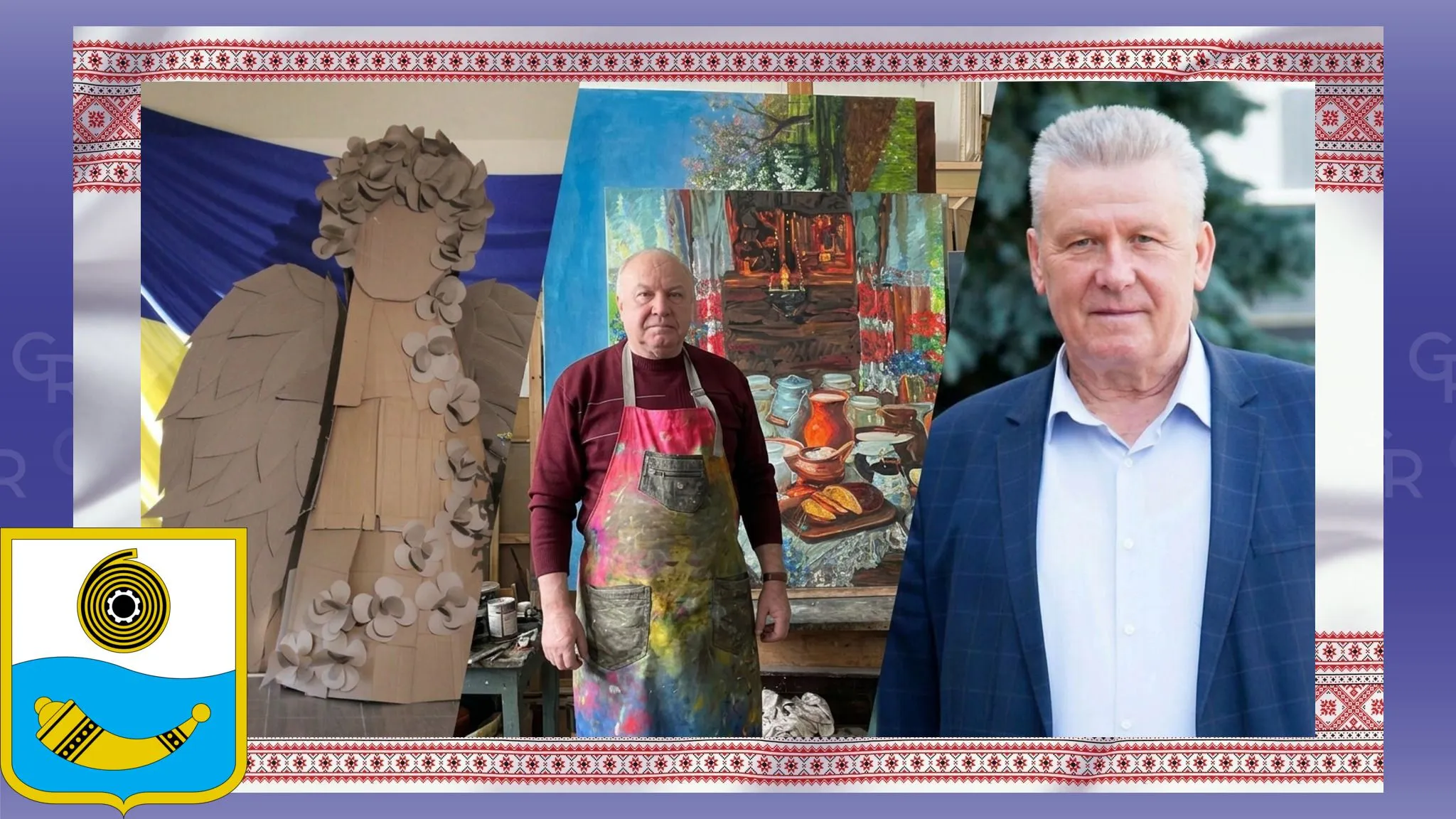
Collage by Olena Zelenina.
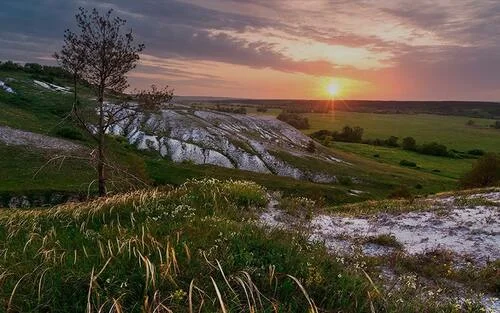
“In Mezyn, there is a spot called 'Ukrainian Switzerland'... Every year we gather in our parents' house, and what mom's borscht or borscht from mom's stove is — it's a special dish!” — Honored Artist of Ukraine, Taras Shevchenko National Prize Laureate, and Head of the Kharkiv Regional Organization of the National Union of Artists of Ukraine Viktor Kovtun recounts with special emotion.
Shostka is a special place on earth for me, he continues. — 25 km from Shostka lies ancient Mezyn. And 5-a Balchycha St. is the address of the museum-house estate where I was born...
These warm memories of the native land and family traditions contrast with the harsh reality of today. Sumy region, like Kharkiv region, suffers from massive enemy attacks every day, and its frontline communities have become a true frontline of confrontation. Among them is the Shostka territorial community, which regularly experiences brutal strikes due to its proximity to the state border. On the air of the "Voice of the Community" program (a joint project of the Kharkiv Press Club and the "Hromada Group" local media network), host Oleksandr Shvets talked with Shostka head Mykola Noha and Viktor Kovtun about the challenges of frontline life and the unique phenomenon of resilience — preserving culture and art even underground.
"The trials go even beyond the boundaries of consciousness..."
Sirens roared — cautiously, angrily. The phone screen displayed the movement of a KAB (guided bomb) from Russian territories. At that same moment, a deep and heavy impact rolled across the city. Many times one had to hear the sounds and consequences of explosions and blasts, but the destruction from KABs is usually unpredictable and extremely massive...
...A moment later, a new strike! Again somewhere in the settlement, in the northern part of the city. After a while, reports come in about a threat from another direction from the city. A multi-story building is on fire in Hlukhiv, a woman is wounded...
In the morning, 4 Shaheds attacked new-crop grain warehouses in Kaliivka. God helped save an employee who lingered in the building and left it during a lull between drone strikes.
The war, full-scale and destructive, which humanity has not seen for many decades, has dragged on into its fifth year. And if we count from 2014? And if we remember how much Ukraine and Ukrainians have been gnawed at in general? Bloody events lasting even a few days are a tragedy, and such trials go even beyond the boundaries of consciousness...
These are lines from the Facebook page of Mykola Noha, Head of the Shostka Territorial Community. The situation in Shostka remains extremely difficult. The enemy is purposefully hitting civilian infrastructure and logistics, hunting civilian transport and destroying trucks.
“Indeed, every day there is shelling of our civilian infrastructure, we try to restore it, we don't always manage to do it in time, but we are working to ensure a minimum level of vital activity,” notes Mykola Noha. Over the past few days alone, as a result of massive attacks, residential buildings and infrastructure objects have been damaged, and civilians have been wounded. Even in the most remote corners of the community (for example, in the Vovnyanskyi starostate district), enemy drones strike civilian objects. Despite this, municipal services, the State Emergency Service, police, and energy workers continue to work non-stop, although electricity is supplied with major interruptions, and hospitals and vital facilities are forced to switch to generators.
Migration, IDP Support, and the Power of Unity
Due to constant shelling, some residents left in search of safety, but people from even hotter frontline spots are coming into the community. Currently, the Shostka community has sheltered 7,800 internally displaced persons. Local authorities try to create equal conditions for them: IDPs are provided with social services, assistance through the social protection department, and private sector residents are supported with firewood.
Analyzing the challenges of the border area and the hard trials of war, Shostka Community Head Mykola Noha emphasized that the key to the country's survival is comprehensive cohesion:
“And I will tell you: alone we cannot survive — only together. Supporting each other both on the external contour of Ukraine and in internal regional areas, by joint efforts we can overcome and pacify such an enemy and win a just peace.”
The Weapon of Art: "Muses Are Not Silent" A unique phenomenon has been that even cultural institutions and exhibition centers have moved into shelters. International-level art exhibitions, in particular the famous "Unconquered Borderland" project, as well as children's groups, operate in underground conditions. Thanks to many years of cooperation between City Mayor Mykola Noha and Honored Artist of Ukraine Viktor Kovtun, a unique space has been created in the city — an art center-gallery with an area of 2.5 thousand square meters. Currently, almost 300 works of the artist are exhibited there. Here, for the third time, the international exhibition "Unconquered Borderland" was held, covering participants from seven European countries.
Culture in Shelters: Unprecedented Experience of the Border Region
Due to the proximity of the border and constant enemy shelling, Shostka found itself in extremely difficult conditions where surface maneuvering is practically non-existent. However, the community not only adapted underground spaces for education but also moved spiritual life there. “Today, all work in our community has gone underground. All schools study exclusively in underground schools, in underground premises... The art center has also moved underground, into a shelter. And the exhibition itself took place underground — for the first time in Ukraine in underground premises! There is nothing you can do, you have to reconcile, you have to survive in such conditions,” said City Mayor Mykola Noha. Five choreographic and creative groups continue to work in underground conditions, involving hundreds of children. The community head emphasizes: despite the war, which has been going on for the fifth year, a whole generation is being formed that must grow strong and competitive.
Viktor Kovtun spoke about the scale of creative work during the war: over these years, he has created about 1.5 thousand works dedicated to military themes, medics, and defenders. Recently, for the series of works "Unstolen Childhood", the Head of the National Union of Artists of Ukraine Kostyantyn Chernyavsky received the prestigious Bohdan Khmelnytsky State Prize of the Armed Forces of Ukraine. Free top-level workshops have been created for artists in Shostka, and youth are actively involved in creativity. As the leaders note, culture in times of trial becomes that invisible foundation that helps society survive and preserve humanity.
More illustrations in the Ukrainian original.

Comments
Some more relevant news for now