
























A Leap into the Unknown: How Kharkiv Became a Global Capital of Cold
Articles | | 1,400 | Author: By Olena Zelenina
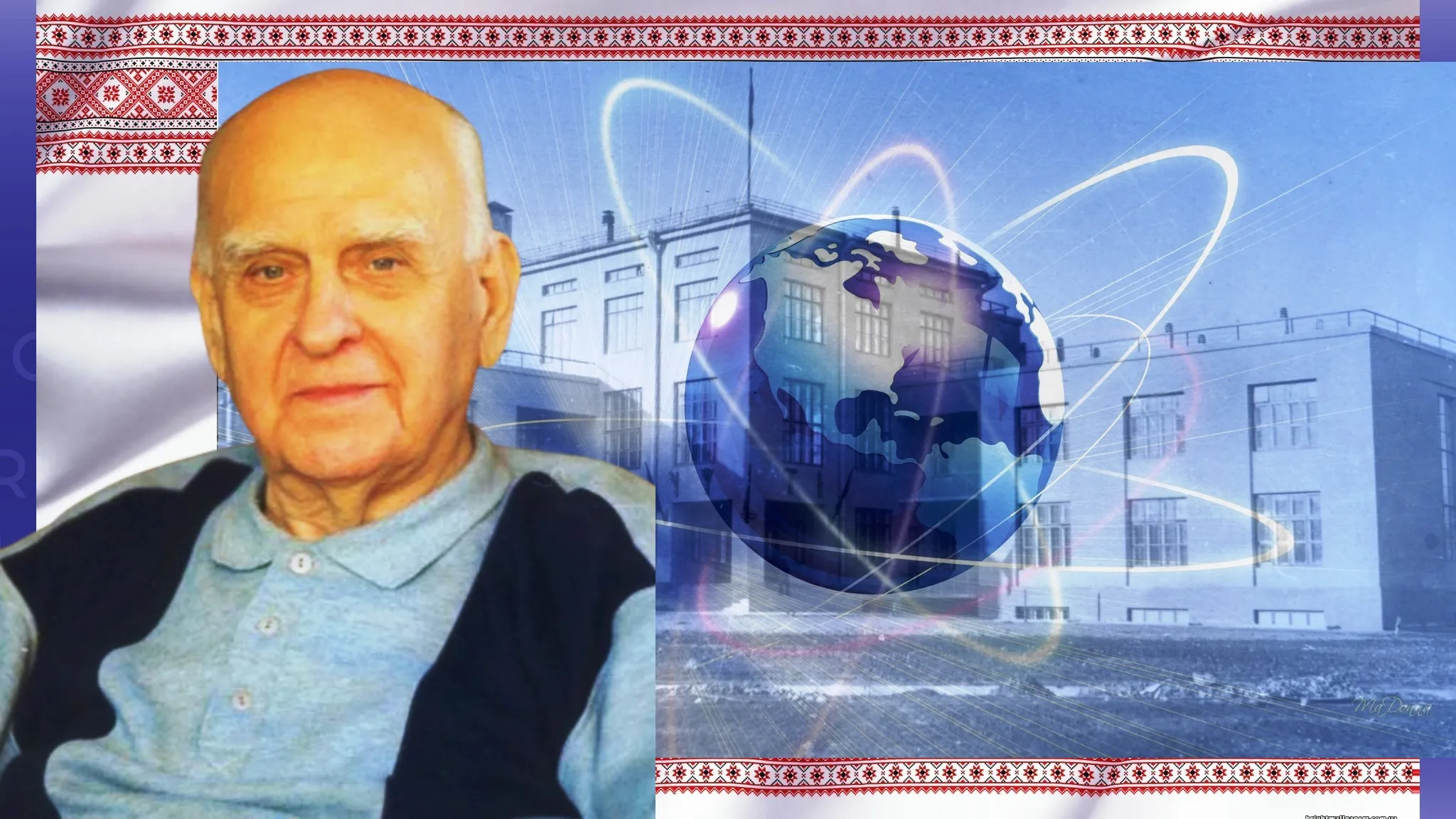
Collage by Olena Zelenina.
We mark the anniversary of an event that forever changed the landscape of global physics. On March 23, 1931, within the walls of the Ukrainian Institute of Physics and Technology (UIPT) in Kharkiv, liquid hydrogen was produced for the first time. This was not merely a technical achievement; it was Ukraine's entry into the elite "ultra-low temperature club," which at that time included only three other cities: Leiden, Toronto, and Berlin.
Fourth in the World
Kharkiv as the World's Fourth Center In the early 1930s, low-temperature physics was the equivalent of today’s quantum computing or space exploration—the absolute cutting edge of science. Liquefying hydrogen required reaching temperatures of approximately −253 °C. The success of the Kharkiv scientists meant that the UIPT cryogenic laboratory officially became the fourth facility on the planet capable of conquering such extreme conditions.
Just a year later, the same laboratory produced liquid helium, paving the way for the study of phenomena that seemed like magic: superconductivity and superfluidity.
Significance for Global Science
Why was this so important?
Research at these temperatures allowed scientists to peer inside the atom and understand quantum properties of matter that remain hidden under normal conditions.
This was where the foundations were laid for creating the materials of the future—conductors capable of transmitting electricity without loss (superconductors).
Working with liquid hydrogen provided the technical basis for future rocket technologies and modern hydrogen energy.
From Laboratory to Institute
The Lazarev Legacy The UIPT cryogenic laboratory did more than conduct experiments; it fostered a scientific school. A key figure in this process was Academician Borys Heorhiyovych Lazarev. Upon taking charge of the laboratory, he transformed it into a powerhouse of talent and ideas.
The success of this laboratory and Lazarev's scientific authority eventually necessitated the creation of a dedicated, large-scale institution. In 1960, the Institute for Low Temperature Physics and Engineering (ILTPE) was founded in Kharkiv (today named after B.I. Verkin). Without that first "liter" of liquid hydrogen in 1931, the emergence of such a global scientific giant would have been impossible.
Academician Lazarev and the "Kharkiv School" Borys Lazarev always emphasized that scientific inquiry is a step into the unknown. He managed to preserve the spirit of the pioneers even during the most challenging times. Under his leadership, the Kharkiv school of cryogenics became a brand recognized from the USA to Japan. His memoirs of the laboratory's early days are a chronicle of courage and intellectual daring, where Ukrainian physicists made Nobel-level discoveries using custom-built equipment.
Today, we remember this experiment as proof that Kharkiv has always been and remains an intellectual stronghold that shapes the global scientific space.

Comments
Some more relevant news for now