













Main article image on the Gromada Group site
About the fate of Polovtsian women during the Russian occupation and what their fate is today.
In the world, there are many historical monuments that we wish to preserve for future generations. One such monument is the Polovtsian Maidens in Izyum, located on the Kremyanets hill. This monument has a very rich history.
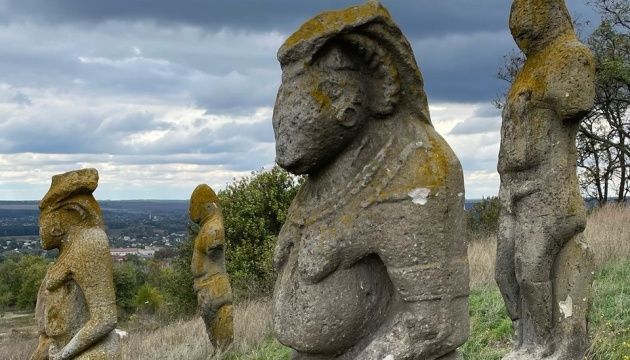
Photo:ukrinform.ua
So, what are the Polovtsian Maidens?
The Polovtsian Maidens are gravestone stone statues of the Polovtsians (Kipchaks, Kumans), relics of sacred art from the 9th to the 13th century. They symbolized ancestors and were placed in specially built sanctuaries for them. They were usually erected on the tops of high burial mounds or hills. These were typically ordinary square or rectangular enclosures made of stone. The size of the sanctuaries likely depended on the number of respected ancestors contained within them. More often than not, two statues were placed facing east – a male and a female statue representing the ancestors of the clan. Occasionally, there were sanctuaries with clusters of statues – each containing at least 12-15 figures. Bones of rams were often found at the foot of these statues. Other names for them include Polovtsian boulders, Polovtsian sculptures, Polovtsian anthropomorphic sculptures, anthropomorphic stelae, and so on.
The Polovtsian Maidens can be divided into the following types:
- Anthropomorphic figures made from specially selected elongated stones;
- Depictions of men with mustaches and small beards;
- Depictions of men predominantly without hats, sometimes having one or several long braids down to their waist. Some figures have one or both ears adorned with earrings, and occasionally they wear a necklace or collar;
- Figures of men dressed in a caftan with triangular lapels and narrow sleeves. At the waist, there is a belt adorned with various decorations, buckles, and plates. Less commonly, the clothing is loose with wide sleeves without a belt or weapon;
- Figures holding a dagger or sabre;
- Female figures with emphasized reproductive organs. The "Chornukhyn Madonna" (found in Chornukhino, Luhansk region) holds a child in her arms;
- Stone maidens with vessels, held in their right hand, and sometimes in both hands. The shapes of the vessels vary: cups, bowls, cylindrical containers. There are known cases where a sitting bird is shown on the right hand.
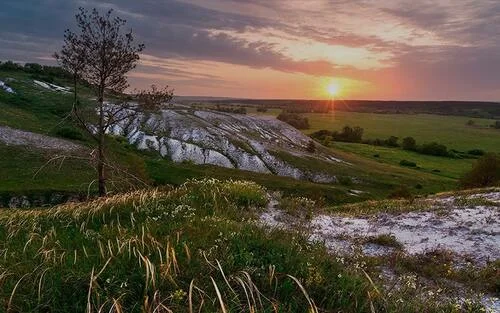
The overwhelming majority of such stone figures is concentrated in the steppe on the right bank of the Siversky Donets River. In the city of Izyum in the Kharkiv region, the Polovtsian Maidens are located on the Kremyanets Mountain.
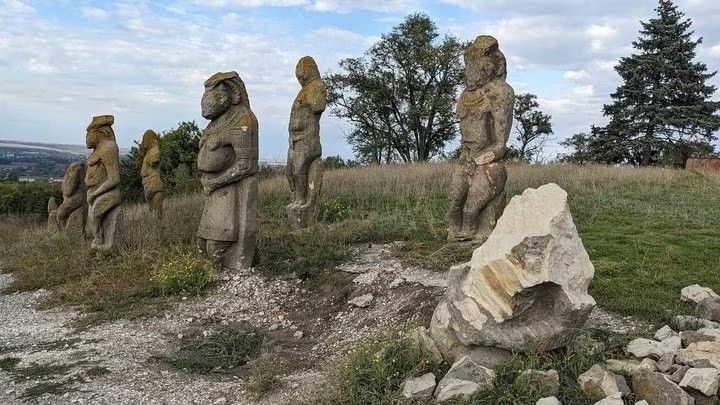
Photo: suspilne-media
Over time, the figures began to show hands holding bowls at waist level as well as rounded bulges representing breasts. The second type is found not only along the Siversky Donets River but also extended south into the region – to the Don River and the Azov Sea.
But then came the war and the occupation of the city of Izyum; the Polovtsian Maidens were dismantled for restoration. According to the head of the regional department of culture and tourism, Eduard Pavlenko, the sculptures were evacuated to a safe place so they could be preserved while the martial law was in effect, allowing restorers to work simultaneously.
"The condition of the statues varies greatly. One maiden was severely damaged during the period of Izyum's occupation. Several maidens were harmed. In general, their condition reflects the effects of time, as they have been there for quite a long time," Eduard Pavlenko explained.
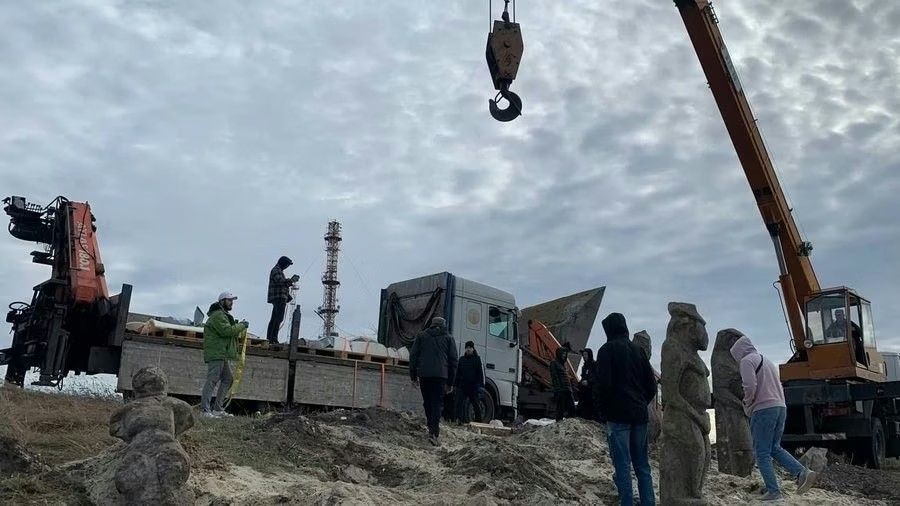
Photo: suspilne-media
"Under the supervision of restorers, special wooden structures were developed and installed around each maiden separately. Sand was filled inside each statue, and they were wrapped in several layers of special film to prevent moisture and swelling of the wood," informed Marina Kolovorotna, the head of Izyum City Council's Department of Culture.
She mentioned that after the de-occupation of the city in the fall of last year, it was revealed that the Russians had completely destroyed one of the nine Polovtsian Maidens due to shelling. It later became evident that only two of them had escaped damage. Therefore, specialists arrived in Izyum to conserve them: “They filled in all the cracks, closed the damage, and treated the surfaces appropriately. A stone specialist worked on them, as they are made of sandstone and require specific technology to restore,” she said.
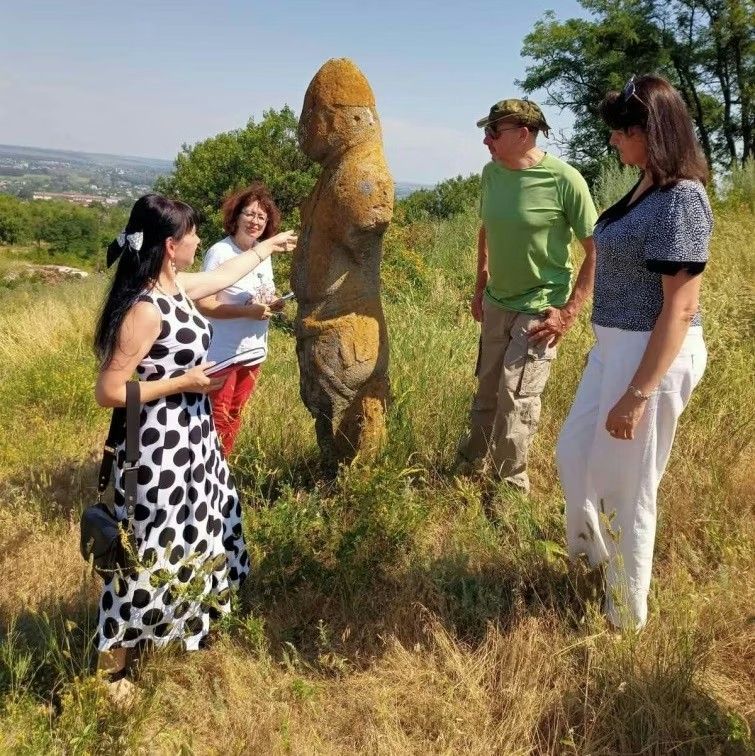
Photo:pravda-com-ua
The head of the Department of Culture disclosed that the idea of moving the maidens to Kharkiv, initially mentioned by the Minister of Culture and Information Policy, Oleksandr Tkachenko, was ultimately decided against.
"This was preliminary information; they are now secured in Izium, on Mount Kreminets, where they are. The monuments are very dear to the community, so we wanted to preserve them on site as much as possible, to transport them nowhere, to avoid any damage, to prevent making things worse," explained Kolovorna.
There are many legends about this monument.
Divine punishment. The stone women, it is said, were once just like us, but they turned to stone. This happened as follows: God created people before the sun, and they lived in darkness, feeding on the fruits of plants. But then, the sun appeared. The people became alarmed and, to get rid of the sun, they began to climb up the high mounds and spit at it. God cursed them for this – and they turned to stone right where they stood. But the legend says that there is hope for these petrified people to transform again, to become as alive as God created them.
The stone women were once living women. They harvested bread in the steppe during the summer, and it was on that very day that the sun rose. And it rose for a long time; it interrupted the women’s work – it was already just before evening. The women saw it and began to spit and curse it: "May such and such happen to you! Because of you, we lost a lot of time!" And for that, they turned to stone and went blind.
Guardians on the mounds. Once, there were more mounds in the steppe, and mamai stood on them. But there are fewer of those mounds now because they were pushed apart by plows. Only clay hills remain… Even before the birth of Christ, there was a flood. In those places where the water caught people, they piled up mounds and saved themselves on them. Whether it’s true or not – God knows. And the Tatars placed mamai on the mounds. They all faced east toward the sun. These were their gods or guardians. They only stood on large mounds. Perhaps they might have stood on all of them, but they were removed and buried in the ground.
The story of the haiman. Once, it is said, merchants from Crimea were traveling and, not reaching the Nikopol crossing, stopped on the upper steppe by a high mound to spend the night. They set up camp, cooked kulesh, had dinner, and settled down to sleep, each wherever they could. One man nestled under a cart, another by the burnt-out fire, and one young haiman went to sleep on the mound. He spread his coat by the stone woman, lay down, and began to doze off. Suddenly, he imagined that the woman stirred, came to life, stretched her hands toward him, and began to entice him into sinful deeds. Oh, he screamed in a voice not his own, and all the merchants woke up. They hurried to the mound to the haiman. They looked and could not believe their eyes: near the woman lay what seemed to be their friend, but he was stone.
"Oh, this is bad," said the merchant chieftain. "He lay near the idol and may not have crossed himself before sleeping, so the unclean idol's power must have passed to him, and now he has turned to stone. Now the only way for him, poor soul, is to atone for it in church."
The merchants laid the stone haiman onto a cart and at dawn set off toward the Dnipro. Once they crossed, they found a priest in Nikopol, told him everything, and he served a prayer in church – and immediately the unfortunate haiman revived. And the mound where this incident happened is now called Haiman's. Sometimes, it is also called Haimanka.
We hope that the monument of architecture, the Polovtsian women, will be restored and that it will be preserved for future generations.
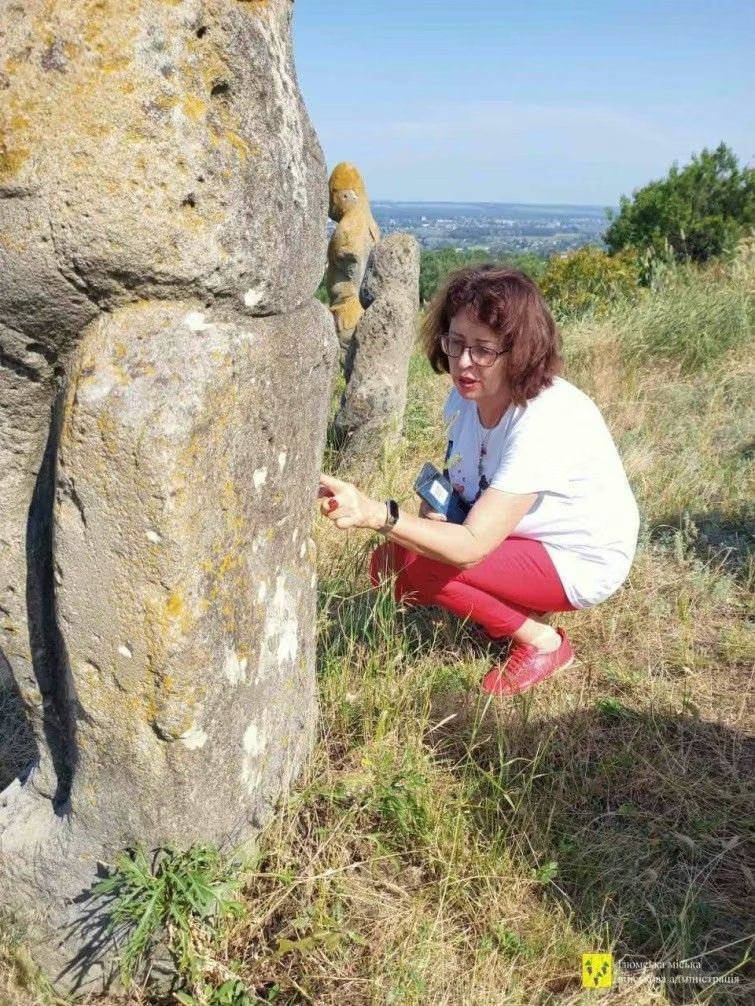
Photo: pravda-com-ua
This material was created within the framework of a project by the Institute of Mass Information with the support of the Ministry of Foreign Affairs of the Netherlands.

Comments
Some more relevant news for now