








Zmiiv Community: "We hold on to our land and to life as long as our heart beats"…
Articles | | 213 | Author: Olena Zelenina
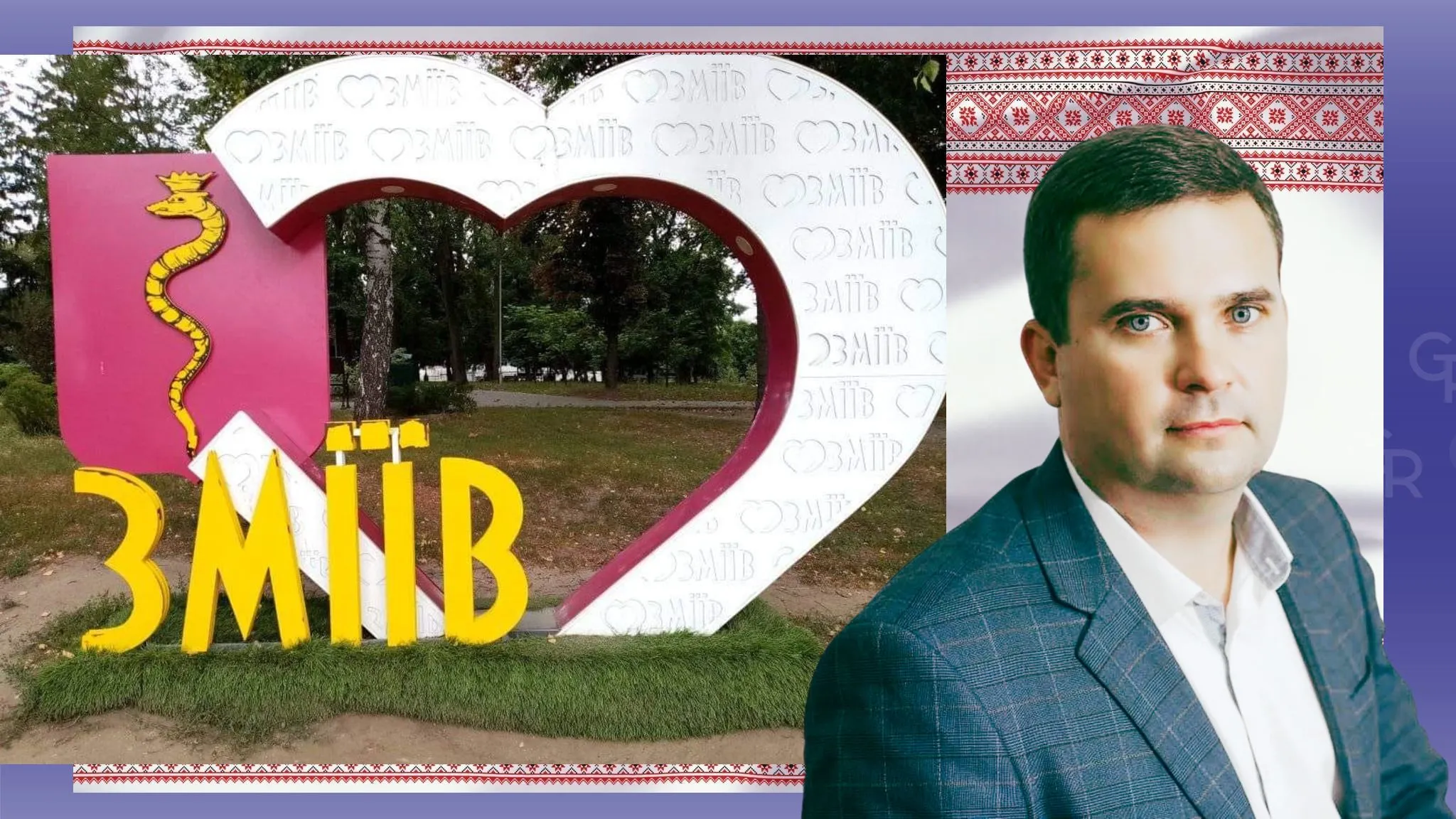
Collage by Olena Zelenina.
"The single dream for every Ukrainian is for the war to end as soon as possible, for a peaceful life to come, and for our residents to forget what explosions are, and for children to return to schools."
This is spoken by Pavlo Holodnikov, Head of the Zmiiv City Territorial Community of Kharkiv Oblast.
When it comes to the frontline regions of Kharkiv Oblast, which are located slightly deeper from the very line of fire (where it is somewhat calmer than under direct shelling), Zmiivshchyna emerges as a vivid example of resilience.
The community takes on a tremendous burden. On the air of the program "Voice of the Community" (a joint project of the Kharkiv Press Club and the network of local media "Hromada Group"), the head of the Zmiiv community Pavlo Holodnikov spoke candidly to journalist Oleksandr Shvets about how the region lives today, how it receives displaced persons, supports the Armed Forces, and prepares for complex challenges.
"Every Third Person Is a New Resident":
Tremendous Burden on the Community
The Zmiiv community, which unites 60 settlements, has become a safe haven for people fleeing the horrors of occupation and active combat operations from Kharkiv, Luhansk, and Donetsk oblasts.
At the peak, more than 22,000 internally displaced persons were officially registered here, and today 18,300 IDPs are listed in the databases.
Since a significant portion of the territory consists of dacha cooperatives and the private sector, many families settled precisely there.
However, finding a vacant apartment in the city is almost impossible. To support the most vulnerable categories (single elderly people whose housing was destroyed), with the support of the Kharkiv Regional Military Administration, the premises of "Suzirya" (a former educational and social complex) were repurposed into a multifunctional social hub under the management of the social protection department.
Currently, about 100 people reside there on a permanent basis, cared for by the social service. In addition, large-scale work is underway together with the regional military administration on the reconstruction of a former boarding house into a full-fledged residential complex for 74 apartments (from one-room to three-room) with a modern radiation shelter, autonomous heating, and utilities. "The task of my team is for displaced persons to retain their place of registration specifically in our community, because we understand that taxes are paid at the place of registration... The Zmiiv community slightly overfulfilled its budget during the year, which made it possible to repair the road surface and help the military."
New Housing for Large Families
from Frontline Communities
The special pain and at the same time the main hope of frontline regions are children. The Zmiiv community actively supports large families who escaped enemy shelling from the Kupiansk district, in particular the Sanin and Tytarenko families. As Pavlo Holodnikov notes, the authorities are systematically developing projects to provide such families with full-fledged housing.
In the community, four large houses (with an area starting from 200 m²) were purchased using state and local funds, fully equipped with furniture and the necessary conditions for living.
Previously, with the support of the First Lady's Foundation and the regional administration, similar initiatives were also implemented. To date, a fund of seven such houses has been formed in the community. Despite the fact that individual families later departed to other regions or abroad (specifically to Germany and Poltava), this property is in constant demand. According to the head of the community, when the first project was created jointly with the Kharkiv Regional Military Administration with the participation of families from Kupianshchyna, thanks to word of mouth and proper conditions, literally within a week it was possible to find many people wishing to move. Currently, such families receive ongoing support not only from the state, but also directly from the local budget. The leadership of the community emphasizes that this direction will continue to be developed, because children are the future of Ukraine.
Agro-Sector Under the Pressure of Prices
and Logistics
Despite the difficulties, the community is looking for ways to employ displaced persons and support the local economy. A significant role in this is played by cooperation with the employment center through socially useful works: during the war years, about 400 people joined them, helping with landscaping and clearing rubble. The state paid them wages, which allowed saving the local budget and maintaining order in the city.
Also, specialists from affected regions are integrating into the Zmiiv community — in particular, doctors (who reinforced the Zmiiv Central District Hospital) and education workers. "We extended a helping hand... and provided those opportunities for them to stay and work with us. Every community must decide its own destiny, but we always come to the aid of our colleagues, and if there are such great specialists, we will gladly offer them work on the territory of our city." The situation in the agricultural sector is relatively stable — all arable land was sown, and there is no mine hazard in the fields.
However, farmers faced another serious challenge — pricing and logistics: Due to blocked shipping and non-operational ports, exporting products is extremely difficult. The cost price of 1 ton of wheat was about 8,000 UAH, while the market price fluctuated between 4,500–6,500 UAH. Due to low prices and a lack of storage space, many farmers are forced to leave unharvested corn right in the fields. Despite this, thanks to conscientious tax payments by businesses and farmers, the Zmiiv community even demonstrated budget overfulfillment during the year, which allows maintaining roads, funding municipal enterprises, and helping the army.
Energy Autonomy and Preparation for Winter
In response to enemy attacks on energy infrastructure and prolonged power outages, the community is betting on decentralization and alternative sources.
In the Central District Hospital, with international support, solar panels with a capacity of 200 kW are being installed, which will ensure the autonomy of the medical institution and the neighborhood. Similar solar stations are being deployed at water intakes and municipal enterprises. Fuel has been purchased, decentralized boiler houses have been prepared, and the issue of acquiring powerful battery stations for the uninterrupted operation of the administration during blackouts is being resolved. Significant attention in the community is paid to the modernization of aging housing stock.
On the initiative of the mayor, supported by the city council, the capital repair program is gaining momentum. While previously for decades such work was almost never carried out, now the volume of funding has increased significantly.
During the year, four apartment buildings were repaired (some of which suffered due to adverse weather conditions and hurricane winds). Project and cost documentation and expertise for house
No. 1a on Sokalivske Highway are on the finish line, where the roof will also be updated. "The task is to do everything so that we work. I understand that it is expensive, I understand that it is quite, perhaps, inefficient, but for the population it is extremely necessary to ensure the passage of the heating season in such a mode that the population does not feel on themselves the challenges that arise today in our country as a whole."
For the next year, funding is laid down for the repair of internal building utilities in basements (specifically water and heat supply systems), which are within the city's area of responsibility. The final amounts will be approved after the budget is adopted.
Safety of Children, Education, and Support
for the Armed Forces of Ukraine
At the completion stage is the construction of protected educational spaces in Lyceums No. 1 and No. 2, which will allow children to return to blended learning and socialization. During the year, millions of hryvnias were directed from the local budget (direct expenditures and subventions) for the purchase of pickups and transport vehicles for the 92nd Separate Assault Brigade and other units of the Defense Forces.
A children and youth sports school, youth spaces (Happy Day) operate in the community, and the construction of new sports facilities is underway, in particular a modern football field with artificial turf.
Beauty and Comfort in Wartime:
Park Landscaping and Tourism Development
Despite the difficult challenges of war, large-scale landscaping of the Alley of Glory dedicated to fallen hero-defenders continues in the Central Park.
Currently, the dismantling and construction of new steps has begun there, as the park is located on a hill, which is important for convenient access by residents from other streets. Plans for next year include similar updates to territories and alleys of glory in all starostat districts. Special attention is paid to recreational areas. Despite the official ban on swimming due to safety decisions of the council, in summer people traditionally come to the water.
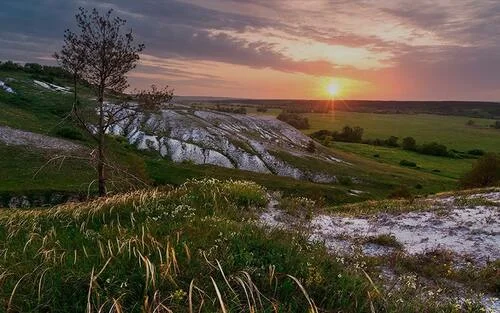
The picturesque area "Kruchi" is popular, where people come even from Kharkiv for sunrise excursions. Zmiiv historically remains one of the key resort areas of the region. Maintaining order and infrastructure in such places contributes to attracting tourists, developing local business, and investments in the community.
The "Gromada Group" local media network works thanks to your trust.


Comments
Some more relevant news for now