
























Yuriy Fedorenko on when the war might end, the battles in the Kharkiv region, and Ukraine's lessons for NATO
War | 16 February, 2026 at 14:56 | 1,018 | Author: Olena Zelenina
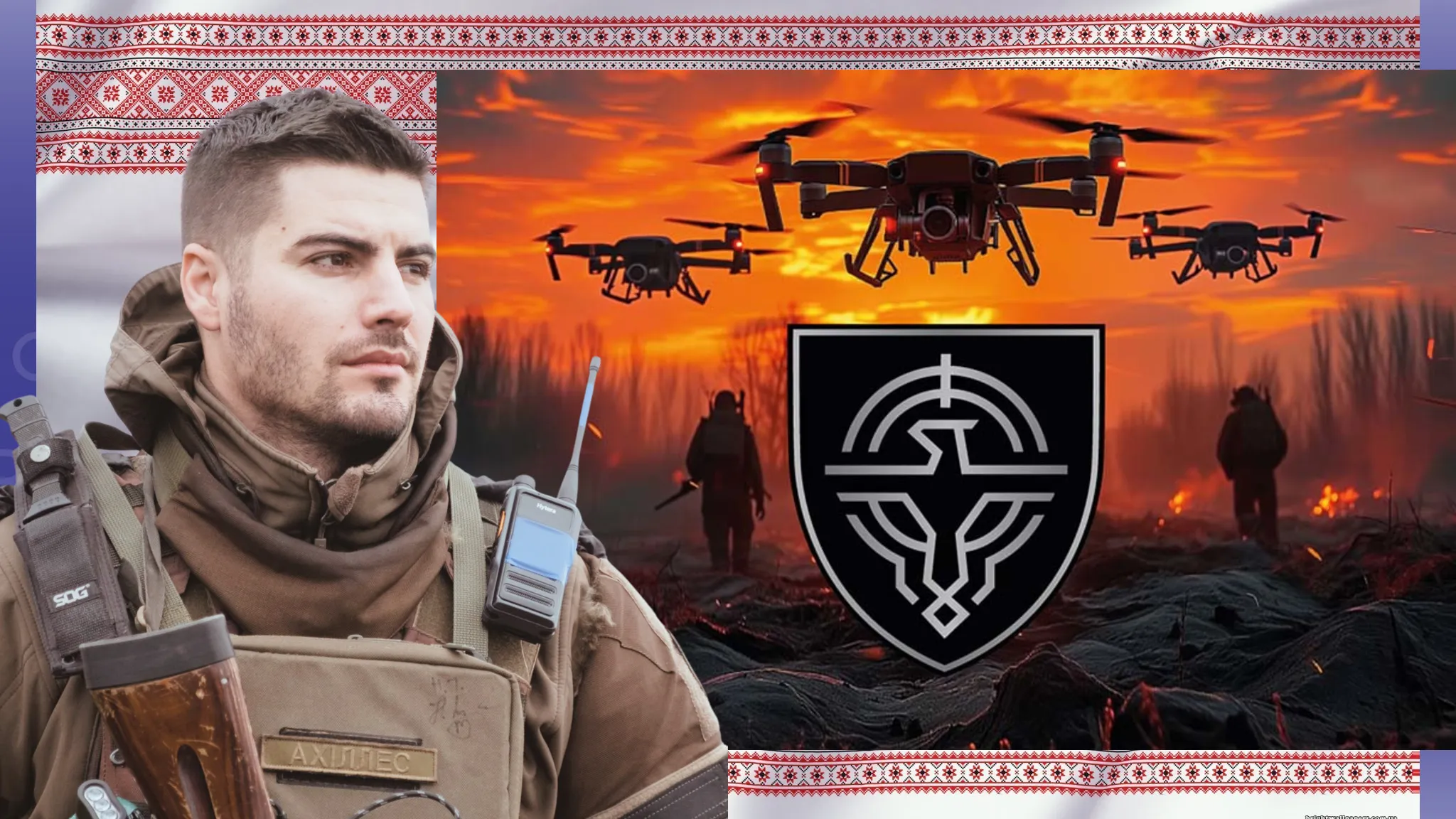
Collage by Olena Zelenina.
The hottest sections of the fire line this year will be — Donetsk, the junction of the Donetsk region with the Kharkiv region, as well as the Zaporizhzhia region. And the year 2027 — "this is a gradual fading of intensity. And the first half of 2027 will likely form the maximum prerequisites for the signing of a peace agreement."
Such a forecast was made on the air of Ukrainian Radio by the commander of the 429th separate brigade of unmanned systems "Achilles," Hero of Ukraine Yuriy Fedorenko.
Summary of Interview with Yuriy Fedorenko ("Achilles"):
Subject: War outlook, the role of unmanned systems, and lessons for NATO. Key Figure: Yuriy Fedorenko, Commander of the 429th Unmanned Systems Brigade "Achilles," Hero of Ukraine.
War Timeline and Predictions The Decisive Year (2026): Fedorenko predicts that 2026 will be the most intense and decisive year of the full-scale war. Key battles during the spring, summer, and autumn of 2026 will determine the final boundaries and terms of the conflict.
End of War (2027): He anticipates a phased decline in combat intensity by early 2027, which could create the necessary conditions for a peace agreement.
Hotspots: The most active fronts this year remain Donetsk, the junction of Donetsk and Kharkiv regions, and Zaporizhzhia.
Lessons for NATO and Western Partners The "North Korean Model": Fedorenko points out that North Korea is gaining invaluable modern combat experience by sending personnel to fight alongside Russia. Their training programs are already adapting to the lessons of the drone war, making Russia's allies stronger.
Operational Training: He urges Western partners to send troops to Ukraine, if not for direct combat, then for training purposes. This would ensure NATO armies become significantly more proficient in drone warfare.
Indirect Involvement: If direct involvement is politically impossible, he suggests a "volunteer" model: discharging top officers from service to fight in Ukraine with Western funding and equipment to gain real-world experience.
Economic and Tactical Reality (The "Mathematics" of War) Doctrine Mismatch: Current Western military doctrine, focused on air superiority and expensive precision strikes, is not adapted to the Ukrainian battlefield.
Resource Exhaustion: Fedorenko emphasizes the unsustainability of using $2 million missiles to down $50,000 drones. He warns that Western industry cannot produce enough interceptors to match the mass production of cheap UAVs.
Conclusion: War is fundamentally a matter of mathematics and resource management; the side that manages resources more efficiently wins.

Comments
Some more relevant news for now